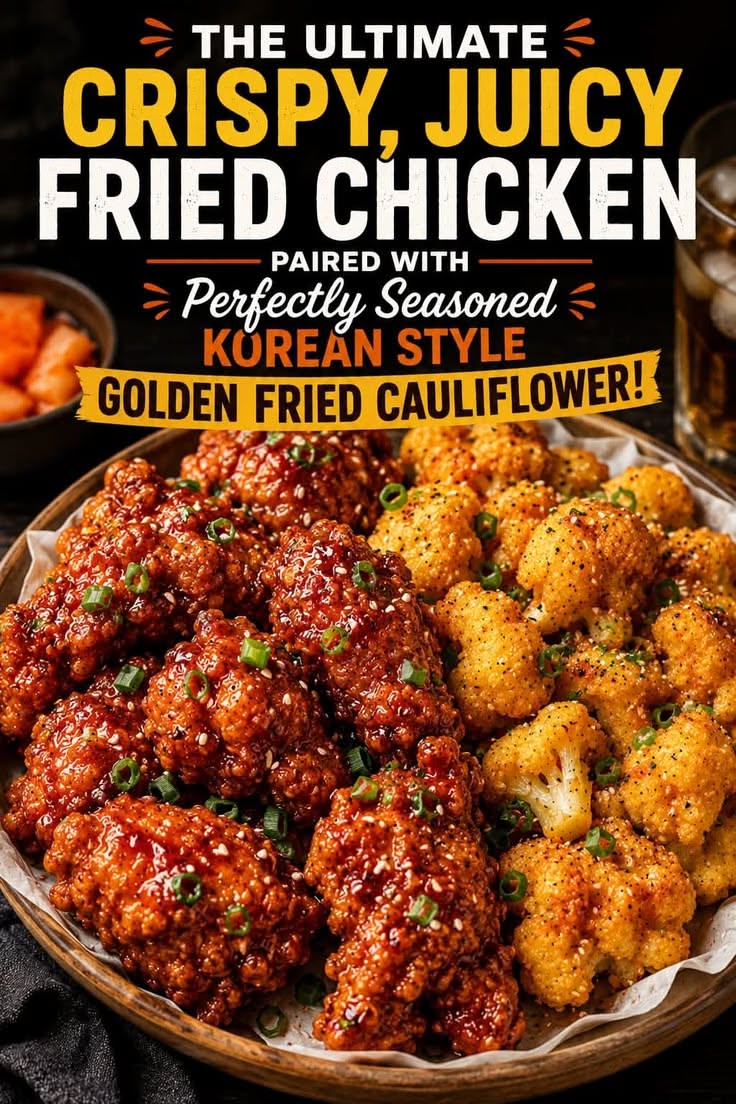
Most people think the secret to incredible Korean fried chicken is all about the sauce. They’re wrong.
While that glossy, sweet-and-spicy coating certainly steals the spotlight, the real secret lies in something most home cooks completely overlook: the crispy, craggy coating underneath. Get that wrong, and you’ll end up with soggy chicken that loses its crunch the second the sauce touches it.
Get it right, and you’ll create the kind of Korean fried chicken that rivals your favorite restaurant—crispy on the outside, juicy on the inside, and coated in a sticky gochujang glaze that clings perfectly to every bite.
And here’s the best part: you don’t need professional equipment, a deep fryer, or hard-to-find ingredients to make it happen. In this guide, you’ll discover how to create authentic Korean fried chicken and crispy Korean fried cauliflower at home, including the exact sauce recipe, coating techniques, frying methods, and expert tips that make all the difference. Once you try this recipe, ordinary fried chicken may never satisfy you again.

Introduction
Korean fried chicken has exploded in popularity around the world, and for good reason. Unlike traditional fried chicken recipes that focus primarily on the seasoning of the meat, Korean fried chicken is all about contrast. Every bite delivers an irresistible combination of textures and flavors: a crackling crispy coating, juicy meat, sweet heat, tangy notes, savory umami, and a sticky glaze that somehow enhances the crunch instead of destroying it.
What makes Korean fried chicken especially appealing is its versatility. It can be served as an appetizer, a game-day snack, a family dinner, or even as party food that disappears within minutes of hitting the table. Better yet, the same techniques can be applied to vegetables like cauliflower, creating a vegetarian-friendly version that delivers all the crunch and flavor without the meat.
The recipe featured in this guide draws inspiration from traditional Korean flavors while keeping the process approachable for home cooks. At the heart of the recipe is a homemade Korean sticky chili sauce made with gochujang, the famous Korean fermented chili paste that has become a staple ingredient in kitchens around the world. Combined with gochugaru, rice vinegar, syrup, garlic, ginger, and sesame oil, it creates a balanced sauce that’s sweet, spicy, tangy, and deeply savory.
One of the most interesting aspects of Korean fried chicken is that the sauce isn’t merely poured over the chicken. Instead, it is carefully designed to cling to the crispy exterior without turning it soggy. This balance between crunch and glaze is one of the reasons Korean fried chicken stands apart from many Western fried chicken recipes.
You’ll also discover why the coating itself is so important. By combining self-raising flour and cornflour, along with a buttermilk marinade and a carefully seasoned dredge, you can create those distinctive crunchy ridges that make every bite satisfying. The process is surprisingly simple once you understand the science behind it.
Another reason this recipe stands out is its flexibility. Whether you’re cooking for meat lovers, vegetarians, or a mixed group, you can prepare crispy chicken and crispy cauliflower using the exact same coating and sauce. The result is a crowd-pleasing platter filled with variety, texture, and bold Korean-inspired flavors.
Throughout this guide, you’ll learn:
- What makes Korean fried chicken different from traditional fried chicken
- Why gochujang is considered the secret ingredient
- How to make an authentic Korean sticky chili sauce
- The best way to prepare chicken and cauliflower for frying
- How to achieve maximum crispiness every time
- Common mistakes that ruin texture and flavor
- Serving and presentation ideas for restaurant-quality results
If you’ve ever wondered why restaurant Korean fried chicken tastes so addictive, you’re about to discover the techniques that make it happen. Better still, you’ll learn how to recreate those same results in your own kitchen using ingredients that are easier to find than ever before.
What Is Korean Fried Chicken?
Korean fried chicken is often described as one of the crispiest styles of fried chicken in the world, but that description only scratches the surface. While crunch is certainly a defining characteristic, Korean fried chicken is really about creating a complete eating experience that balances texture, flavor, and presentation.
Unlike many traditional fried chicken recipes that rely on heavy batters, Korean fried chicken typically uses a lighter coating. This coating develops an incredibly crisp shell that remains crunchy even after being tossed in sauce. The result is a lighter, crispier texture that many people find more addictive than conventional fried chicken.
Another defining feature is the sauce. Korean fried chicken is often coated in a sweet, spicy, sticky glaze made with ingredients like gochujang, soy sauce, garlic, ginger, honey, or syrups. The sauce creates layers of flavor that complement rather than overpower the crispy coating.
The popularity of Korean fried chicken can be traced back to South Korea’s vibrant food culture, where fried chicken restaurants are common gathering places for friends and families. Over the years, countless regional variations have emerged, ranging from soy garlic chicken to extra-spicy gochujang versions and even honey butter-inspired recipes.
What makes this style of cooking especially appealing is the attention to texture. Every step of the process is designed to maximize crunch. The marinade adds moisture and flavor. The dredge creates tiny ridges and crinkles. The frying process removes excess moisture and creates a golden exterior. Finally, the sauce is thick enough to coat the surface without soaking into the crust.
“The sauce sticks to the outside and doesn’t make it go soggy.”
This simple observation highlights one of the biggest differences between Korean fried chicken and many other glazed fried foods. The sauce is intentionally formulated to cling to the coating while preserving the crispness underneath.
Korean fried chicken is also highly adaptable. Boneless chicken thighs are popular because they remain juicy and flavorful, but wings, drumsticks, and breast meat can also be used. In recent years, cauliflower versions have become increasingly popular, allowing vegetarians and flexitarians to enjoy the same sweet-spicy-crunchy experience.
The cauliflower variation isn’t simply a substitute—it stands on its own as an exceptional dish. When lightly blanched, coated, and fried, cauliflower develops a surprisingly meaty texture while maintaining its unique flavor. Once tossed in Korean sticky sauce, it’s easy to understand why even dedicated meat lovers often reach for seconds.
Beyond the ingredients, Korean fried chicken represents a philosophy of balance. Sweetness meets heat. Crunch meets tenderness. Richness meets acidity. Every component has a purpose, and when combined correctly, they create a dish that feels far more sophisticated than its simple ingredient list might suggest.
Whether served as a snack, appetizer, main course, or party platter, Korean fried chicken continues to earn fans around the world because it delivers exactly what great comfort food should: maximum flavor, unforgettable texture, and an experience that keeps you coming back for another bite.
Why Gochujang Is the Secret Ingredient
If there is one ingredient responsible for the distinctive flavor of Korean fried chicken, it is gochujang.
This thick, fermented Korean chili paste has been a cornerstone of Korean cooking for centuries. Made from red chili powder, glutinous rice, fermented soybeans, and salt, gochujang delivers a flavor profile unlike any other condiment. It is spicy, sweet, savory, slightly smoky, and packed with umami all at the same time.
Many people assume that gochujang is simply another hot sauce, but that couldn’t be further from the truth. While it does provide heat, its greatest strength is complexity. A single spoonful contributes depth, richness, sweetness, and fermentation notes that would otherwise require multiple ingredients to achieve.
In Korean fried chicken, gochujang forms the foundation of the sticky sauce. The recipe featured in the video uses a remarkably simple ratio:
- 5 tablespoons gochujang
- 5 tablespoons rice syrup or agave syrup
- 5 tablespoons rice wine vinegar
- 1 teaspoon gochugaru
This balanced formula demonstrates how versatile gochujang can be. The sweetness of the syrup softens the heat, while the vinegar introduces acidity that brightens the entire sauce. Together, these ingredients create the signature sweet-spicy-tangy profile that Korean fried chicken is known for.
Another reason gochujang works so well is its texture. Unlike thin hot sauces that slide off food, gochujang naturally thickens sauces and helps them cling to crispy coatings. This characteristic is essential when making Korean fried chicken because it allows the glaze to coat every ridge and crinkle without immediately soaking into the crust.
Beyond fried chicken, gochujang is one of the most versatile ingredients you can keep in your refrigerator. It can be used in:
- Marinades for chicken, beef, and pork
- Rice bowls
- Noodle dishes
- Salad dressings
- Soups and stews
- Dipping sauces
- Vegetable stir-fries
One of the presenters notes that once people buy gochujang and use it for the first time, they tend to keep using it repeatedly. That’s because it transforms simple dishes into something far more exciting with very little effort.
For home cooks new to Korean cuisine, gochujang is arguably the best ingredient to start with. It introduces authentic Korean flavor while remaining approachable and easy to use. Today, many major supermarkets carry gochujang, making it far more accessible than it was just a few years ago.
When combined with garlic, ginger, sesame oil, and rice vinegar, gochujang creates a sauce that feels restaurant-worthy despite requiring only a handful of ingredients. It provides the flavor backbone that makes Korean fried chicken instantly recognizable and endlessly craveable.
Simply put, if crispy chicken is the star of the show, gochujang is the director behind the scenes making everything work together. Without it, you may still have fried chicken. With it, you have Korean fried chicken.

Ingredients You’ll Need
One of the biggest misconceptions about Korean fried chicken is that it requires a long list of specialty ingredients that can only be found in international markets. The truth is surprisingly different. While a few authentic Korean ingredients help create the signature flavor, most of the recipe relies on pantry staples that many home cooks already have in their kitchens.
The beauty of this recipe is that every ingredient serves a specific purpose. Nothing is included by accident. From the flour blend that creates the crispy coating to the sauce ingredients that provide the perfect balance of sweet, spicy, and tangy flavors, each component contributes to the final result.
Let’s start with the protein. Boneless chicken thighs are the preferred choice for Korean fried chicken because they remain juicy during frying. Chicken breast can work, but thighs offer more flavor and are less likely to dry out. In the video, the chicken is cut into bite-sized pieces to create Korean-style chicken nuggets that are easy to coat, fry, and eat.
For the vegetarian option, cauliflower takes center stage. When properly prepared, cauliflower develops an incredible texture that becomes crispy on the outside while remaining tender inside. It’s one of the few vegetables that can truly hold its own against fried chicken when paired with Korean sticky sauce.
Ingredients for the Korean Sticky Sauce
- 5 tablespoons gochujang
- 5 tablespoons rice syrup or agave syrup
- 5 tablespoons rice wine vinegar
- 1 teaspoon gochugaru
- 1 teaspoon garlic
- 1 teaspoon ginger
- 2 tablespoons sesame oil
This combination creates the signature Korean glaze that is sweet, sticky, spicy, and packed with umami flavor.
Ingredients for the Marinade
- 250ml buttermilk
- 2 teaspoons gochugaru
- 1 teaspoon garlic granules
If buttermilk isn’t available, a mixture of natural yogurt and milk creates a very similar result. This substitution is especially useful for readers outside North America where buttermilk can sometimes be harder to find.
Ingredients for the Crispy Coating
- 100g self-raising flour
- 50g cornflour
- Salt
- 1½ teaspoons white pepper
- Garlic granules or garlic salt
The combination of self-raising flour and cornflour is one of the most important elements in the recipe. The self-raising flour creates volume and texture while the cornflour helps produce the signature crunch.
White pepper deserves special attention because it contributes a distinctive flavor commonly associated with restaurant-style fried chicken. Many home cooks skip white pepper, but it plays a major role in creating authentic flavor.
You’ll also need neutral frying oil, spring onions for garnish, and sesame seeds for finishing. While these final ingredients might seem optional, they contribute aroma, freshness, and visual appeal that elevate the finished dish.
If you’re trying Korean fried chicken for the first time, don’t be tempted to simplify the ingredient list too much. Each component works together to create the balance of flavors and textures that makes this dish so memorable.
Making the Korean Sticky Chili Sauce
If the crispy coating is the foundation of Korean fried chicken, then the sauce is the personality. This glossy, vibrant glaze delivers the sweet heat and addictive flavor that has made Korean fried chicken famous around the world.
One of the best things about this sauce is how easy it is to prepare. Unlike many homemade sauces that require extensive simmering or dozens of ingredients, this Korean sticky chili sauce comes together in minutes and can be stored in the refrigerator for future meals.
The presenters in the video describe it as a sauce you’ll make again and again once you’ve tried it. That’s because it works far beyond fried chicken. It can be drizzled over rice bowls, tossed with noodles, served alongside roasted vegetables, or used as a dipping sauce.
Step 1: Combine the Base Ingredients
Start by adding the following ingredients to a saucepan:
- 5 tablespoons gochujang
- 5 tablespoons rice syrup or agave syrup
- 5 tablespoons rice wine vinegar
- 1 teaspoon gochugaru
This equal-ratio formula makes the recipe incredibly easy to remember. The gochujang provides depth and spice, the syrup delivers sweetness and stickiness, and the vinegar balances everything with acidity.
Step 2: Add Aromatics
Once the base ingredients are mixed together, add:
- 2 tablespoons sesame oil
- 1 teaspoon garlic
- 1 teaspoon ginger
Fresh garlic and ginger can be used, but jarred versions work perfectly well for convenience.
The sesame oil introduces a nutty aroma that instantly makes the sauce smell authentic. Garlic adds savory depth, while ginger contributes subtle warmth and freshness.
Step 3: Simmer the Sauce
Place the saucepan over medium heat and stir continuously as the ingredients combine.
As the sauce warms, you’ll notice it becoming smoother and glossier. The sugars in the syrup begin to integrate with the gochujang, creating a thick, shiny consistency that’s perfect for coating fried foods.
“Once that comes to the boil, we’re going to take that off the stove and we’ve got ourselves the perfect Korean sticky chili sauce.”
Allow the mixture to simmer gently for a few minutes before removing it from the heat.
The goal isn’t to reduce the sauce dramatically. Instead, you’re encouraging the flavors to blend together while slightly thickening the texture.
Why This Sauce Works So Well
The secret lies in balance.
Many sauces are either too sweet, too spicy, or too acidic. This Korean sticky sauce combines all three elements in harmony.
- Sweetness from the syrup
- Heat from the gochujang and gochugaru
- Tanginess from the vinegar
- Umami from fermented ingredients
- Aromatic depth from garlic, ginger, and sesame oil
Most importantly, the sauce has enough body to cling to crispy coatings without immediately making them soggy.
This characteristic is what transforms ordinary fried chicken into Korean fried chicken. Every bite delivers crunch first, followed by an explosion of sweet, spicy, tangy flavor.
Make a double batch if possible. You’ll almost certainly find yourself looking for excuses to use it throughout the week.
Preparing the Chicken and Cauliflower
Preparation is where great Korean fried chicken begins. Before any frying happens, both the chicken and cauliflower need to be properly prepared so they develop maximum flavor and texture.
Many people focus exclusively on the coating, but the marinade stage is equally important. It seasons the ingredients, adds moisture, and helps create the rough, craggy surface that makes Korean fried chicken so crunchy.
Preparing the Chicken
Start with boneless chicken thighs.
Chicken thighs are preferred because they contain more fat and connective tissue than breast meat. During frying, this translates into a juicier final product that’s less likely to dry out.
Cut the thighs into bite-sized pieces. Smaller pieces fry more evenly and provide more surface area for the crispy coating and sauce.
Once cut, place the chicken into the prepared buttermilk mixture.
- 250ml buttermilk
- 2 teaspoons gochugaru
- 1 teaspoon garlic granules
Whisk everything together before adding the chicken.
The buttermilk not only tenderizes the meat but also creates a sticky exterior that helps the dredge adhere later.
Preparing the Cauliflower
Cauliflower requires one additional step before joining the marinade.
Break the cauliflower into bite-sized florets. Don’t worry if the pieces aren’t perfectly uniform. The irregular shapes actually create more interesting crispy edges during frying.
Next, blanch the cauliflower.
Instead of boiling it fully, simply pour boiling water over the florets and allow them to sit until slightly softened.
“Otherwise they’re a bit hard.”
This quick blanching step ensures the cauliflower becomes tender inside while still holding its shape.
After draining thoroughly, place the cauliflower into the same marinade mixture used for the chicken.
The marinade coats every surface and begins adding flavor immediately.
Why Marinating Matters
Many home cooks rush straight to the flour coating, but marinating plays several important roles.
- It seasons the food from the inside out.
- It adds moisture that helps create a better crust.
- It improves tenderness.
- It helps the dredge cling more effectively.
- It contributes subtle flavor beneath the coating.
The marinade essentially acts as the glue that holds everything together.
Without it, the coating can become patchy and uneven. With it, the flour mixture absorbs moisture and develops the textured ridges that become incredibly crispy during frying.
Timing Tips
Allow the chicken and cauliflower to sit in the marinade while preparing the dredge and heating the oil.
Even a short marinating period can improve flavor and texture.
If preparing ahead of time, the chicken can marinate longer for additional flavor development. The cauliflower, however, is best fried relatively soon after preparation to maintain optimal texture.
At this stage, everything is ready for the most exciting part of the recipe: creating the crispy coating and transforming simple ingredients into restaurant-quality Korean fried chicken and cauliflower.
Ingredients You’ll Need

One of the biggest misconceptions about Korean fried chicken is that it requires a long list of specialty ingredients that can only be found in international markets. The truth is surprisingly different. While a few authentic Korean ingredients help create the signature flavor, most of the recipe relies on pantry staples that many home cooks already have in their kitchens.
The beauty of this recipe is that every ingredient serves a specific purpose. Nothing is included by accident. From the flour blend that creates the crispy coating to the sauce ingredients that provide the perfect balance of sweet, spicy, and tangy flavors, each component contributes to the final result.
Let’s start with the protein. Boneless chicken thighs are the preferred choice for Korean fried chicken because they remain juicy during frying. Chicken breast can work, but thighs offer more flavor and are less likely to dry out. In the video, the chicken is cut into bite-sized pieces to create Korean-style chicken nuggets that are easy to coat, fry, and eat.
For the vegetarian option, cauliflower takes center stage. When properly prepared, cauliflower develops an incredible texture that becomes crispy on the outside while remaining tender inside. It’s one of the few vegetables that can truly hold its own against fried chicken when paired with Korean sticky sauce.
Ingredients for the Korean Sticky Sauce
- 5 tablespoons gochujang
- 5 tablespoons rice syrup or agave syrup
- 5 tablespoons rice wine vinegar
- 1 teaspoon gochugaru
- 1 teaspoon garlic
- 1 teaspoon ginger
- 2 tablespoons sesame oil
This combination creates the signature Korean glaze that is sweet, sticky, spicy, and packed with umami flavor.
Ingredients for the Marinade
- 250ml buttermilk
- 2 teaspoons gochugaru
- 1 teaspoon garlic granules
If buttermilk isn’t available, a mixture of natural yogurt and milk creates a very similar result. This substitution is especially useful for readers outside North America where buttermilk can sometimes be harder to find.
Ingredients for the Crispy Coating
- 100g self-raising flour
- 50g cornflour
- Salt
- 1½ teaspoons white pepper
- Garlic granules or garlic salt
The combination of self-raising flour and cornflour is one of the most important elements in the recipe. The self-raising flour creates volume and texture while the cornflour helps produce the signature crunch.
White pepper deserves special attention because it contributes a distinctive flavor commonly associated with restaurant-style fried chicken. Many home cooks skip white pepper, but it plays a major role in creating authentic flavor.
You’ll also need neutral frying oil, spring onions for garnish, and sesame seeds for finishing. While these final ingredients might seem optional, they contribute aroma, freshness, and visual appeal that elevate the finished dish.
If you’re trying Korean fried chicken for the first time, don’t be tempted to simplify the ingredient list too much. Each component works together to create the balance of flavors and textures that makes this dish so memorable.
Making the Korean Sticky Chili Sauce
If the crispy coating is the foundation of Korean fried chicken, then the sauce is the personality. This glossy, vibrant glaze delivers the sweet heat and addictive flavor that has made Korean fried chicken famous around the world.
One of the best things about this sauce is how easy it is to prepare. Unlike many homemade sauces that require extensive simmering or dozens of ingredients, this Korean sticky chili sauce comes together in minutes and can be stored in the refrigerator for future meals.
The presenters in the video describe it as a sauce you’ll make again and again once you’ve tried it. That’s because it works far beyond fried chicken. It can be drizzled over rice bowls, tossed with noodles, served alongside roasted vegetables, or used as a dipping sauce.
Step 1: Combine the Base Ingredients
Start by adding the following ingredients to a saucepan:
- 5 tablespoons gochujang
- 5 tablespoons rice syrup or agave syrup
- 5 tablespoons rice wine vinegar
- 1 teaspoon gochugaru
This equal-ratio formula makes the recipe incredibly easy to remember. The gochujang provides depth and spice, the syrup delivers sweetness and stickiness, and the vinegar balances everything with acidity.
Step 2: Add Aromatics
Once the base ingredients are mixed together, add:
- 2 tablespoons sesame oil
- 1 teaspoon garlic
- 1 teaspoon ginger
Fresh garlic and ginger can be used, but jarred versions work perfectly well for convenience.
The sesame oil introduces a nutty aroma that instantly makes the sauce smell authentic. Garlic adds savory depth, while ginger contributes subtle warmth and freshness.
Step 3: Simmer the Sauce
Place the saucepan over medium heat and stir continuously as the ingredients combine.
As the sauce warms, you’ll notice it becoming smoother and glossier. The sugars in the syrup begin to integrate with the gochujang, creating a thick, shiny consistency that’s perfect for coating fried foods.
“Once that comes to the boil, we’re going to take that off the stove and we’ve got ourselves the perfect Korean sticky chili sauce.”
Allow the mixture to simmer gently for a few minutes before removing it from the heat.
The goal isn’t to reduce the sauce dramatically. Instead, you’re encouraging the flavors to blend together while slightly thickening the texture.
Why This Sauce Works So Well
The secret lies in balance.
Many sauces are either too sweet, too spicy, or too acidic. This Korean sticky sauce combines all three elements in harmony.
- Sweetness from the syrup
- Heat from the gochujang and gochugaru
- Tanginess from the vinegar
- Umami from fermented ingredients
- Aromatic depth from garlic, ginger, and sesame oil
Most importantly, the sauce has enough body to cling to crispy coatings without immediately making them soggy.
This characteristic is what transforms ordinary fried chicken into Korean fried chicken. Every bite delivers crunch first, followed by an explosion of sweet, spicy, tangy flavor.
Make a double batch if possible. You’ll almost certainly find yourself looking for excuses to use it throughout the week.
Preparing the Chicken and Cauliflower
Preparation is where great Korean fried chicken begins. Before any frying happens, both the chicken and cauliflower need to be properly prepared so they develop maximum flavor and texture.
Many people focus exclusively on the coating, but the marinade stage is equally important. It seasons the ingredients, adds moisture, and helps create the rough, craggy surface that makes Korean fried chicken so crunchy.
Preparing the Chicken
Start with boneless chicken thighs.
Chicken thighs are preferred because they contain more fat and connective tissue than breast meat. During frying, this translates into a juicier final product that’s less likely to dry out.
Cut the thighs into bite-sized pieces. Smaller pieces fry more evenly and provide more surface area for the crispy coating and sauce.
Once cut, place the chicken into the prepared buttermilk mixture.
- 250ml buttermilk
- 2 teaspoons gochugaru
- 1 teaspoon garlic granules
Whisk everything together before adding the chicken.
The buttermilk not only tenderizes the meat but also creates a sticky exterior that helps the dredge adhere later.
Preparing the Cauliflower
Cauliflower requires one additional step before joining the marinade.
Break the cauliflower into bite-sized florets. Don’t worry if the pieces aren’t perfectly uniform. The irregular shapes actually create more interesting crispy edges during frying.
Next, blanch the cauliflower.
Instead of boiling it fully, simply pour boiling water over the florets and allow them to sit until slightly softened.
“Otherwise they’re a bit hard.”
This quick blanching step ensures the cauliflower becomes tender inside while still holding its shape.
After draining thoroughly, place the cauliflower into the same marinade mixture used for the chicken.
The marinade coats every surface and begins adding flavor immediately.
Why Marinating Matters
Many home cooks rush straight to the flour coating, but marinating plays several important roles.
- It seasons the food from the inside out.
- It adds moisture that helps create a better crust.
- It improves tenderness.
- It helps the dredge cling more effectively.
- It contributes subtle flavor beneath the coating.
The marinade essentially acts as the glue that holds everything together.
Without it, the coating can become patchy and uneven. With it, the flour mixture absorbs moisture and develops the textured ridges that become incredibly crispy during frying.
Timing Tips
Allow the chicken and cauliflower to sit in the marinade while preparing the dredge and heating the oil.
Even a short marinating period can improve flavor and texture.
If preparing ahead of time, the chicken can marinate longer for additional flavor development. The cauliflower, however, is best fried relatively soon after preparation to maintain optimal texture.
At this stage, everything is ready for the most exciting part of the recipe: creating the crispy coating and transforming simple ingredients into restaurant-quality Korean fried chicken and cauliflower.