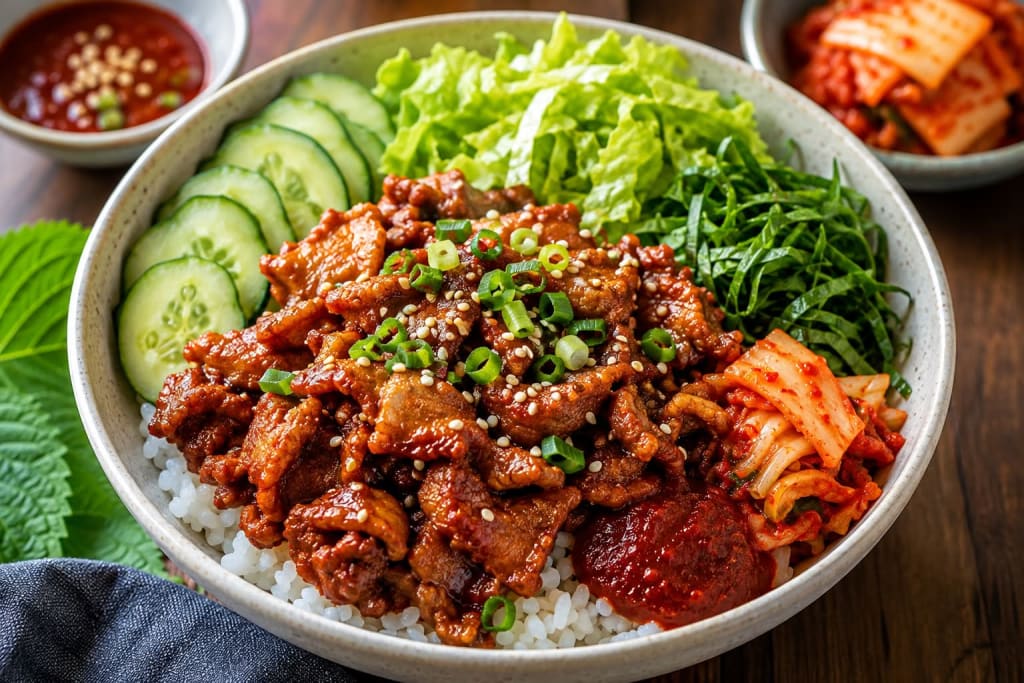
Spicy pork bulgogi rice bowl is the kind of Korean-inspired dinner that makes an ordinary weeknight feel ridiculously exciting, thanks to juicy pork shoulder coated in a sweet, spicy gochujang marinade and served over steaming rice.
There’s something seriously irresistible about Korean BBQ. You get smoky, savoury meat, a punchy chilli kick, fresh crunchy vegetables, fluffy rice and tangy kimchi all coming together in one gloriously colourful bowl. And this pork bulgogi recipe brings that experience straight into your kitchen without requiring a restaurant reservation or a complicated shopping list.
Known in Korea as Dwaeji Bulgogi, Gochujang Bulgogi or Jeyuk Bokkeum, spicy pork bulgogi is a classic Korean pork dish built around one very important ingredient: gochujang, the fermented Korean chilli paste that gives the pork its distinctive spicy, savoury and slightly sweet flavour.
What I particularly love about this spicy pork bulgogi is how the heat develops gradually. The marinade contains grated apple or nashi pear and honey, so your first bite tastes wonderfully sweet and savoury before that delicious chilli warmth starts building.
Better still, this is an incredibly practical easy pork bulgogi dinner. You need roughly 10 minutes to prepare the marinade and pork, 30 minutes for marinating, and around 10 minutes for cooking. That’s a very respectable return on investment for a dinner that tastes this good!
Why You’ll Love This Spicy Pork Bulgogi Rice Bowl
This isn’t just another stir-fry thrown over rice. It’s more like a miniature Korean BBQ feast.
The pork is cooked until beautifully caramelised, then served with hot steamed rice, crisp cucumber, shredded lettuce, aromatic Korean perilla leaves and kimchi. Add a little Korean spicy dipping sauce and you’ve got a bowl packed with contrasting textures and flavours.
The combination is what makes this Korean spicy pork bulgogi so addictive.
The gochujang brings fermented chilli depth, while gochugaru adds another layer of chilli flavour. Soy sauce provides savouriness, honey balances the heat and grated apple or nashi pear brings natural sweetness to the marinade.
Fresh cucumber and lettuce provide crunch and freshness against the rich pork, while kimchi adds that unmistakable fermented tang.
It’s also endlessly adaptable. You can keep it as a rice bowl, serve the pork with lettuce wraps, stir-fry it with extra vegetables or even take the recipe outdoors and cook it on the BBQ.
Ingredients You’ll Need
For four generous servings, you’ll need:
- 600g pork shoulder or pork collar butt, cut into thin stir-frying pieces
- 1 medium onion, about 170g, julienned
- Cooking oil
- 30g green onion, chopped
- 1 tablespoon toasted sesame seeds
- Steamed rice, for serving
- 1 English cucumber, thinly sliced
- 10 lettuce leaves, thinly sliced
- 10 Korean perilla leaves, thinly sliced
- Kimchi
- Korean spicy dipping sauce
For the Spicy Pork Bulgogi Marinade
The marinade is where all the magic happens.
- 100g red apple or nashi pear
- 50g brown onion
- 3 tablespoons gochujang
- 3 tablespoons soy sauce
- 3 tablespoons honey or brown sugar
- 2 tablespoons gochugaru
- 2 tablespoons rice wine or mirin
- 1 tablespoon minced garlic
- 1 tablespoon minced ginger
- 1/8 teaspoon ground black pepper
Don’t be tempted to skip the apple or pear. It adds sweetness and helps create the beautifully balanced flavour that makes this spicy pork bulgogi marinade so good.
How to Make Pork Bulgogi
Start by preparing the marinade. Add the apple or nashi pear, brown onion, gochujang, soy sauce, honey, gochugaru, rice wine, garlic, ginger and black pepper to a food processor or handheld blender.
Blend everything together until you have a relatively smooth, richly coloured sauce.
Next, prepare your pork shoulder. For the best texture, use boneless, skinless pork shoulder and cut it into thin pieces suitable for stir-frying. Pieces around 5cm long, 2–3cm high and no more than about 0.5cm thick work particularly well.
Place the pork in a bowl and pour over the marinade. Mix thoroughly so every piece is coated.
Cover and refrigerate for at least 30 minutes.
While the pork marinates, cook your rice and prepare the fresh vegetables. Thinly slice the cucumber, lettuce and Korean perilla leaves and arrange your toppings so everything is ready when the pork comes off the stove.
When you’re ready to cook, heat a wok or large skillet until properly hot. Add a little cooking oil, followed by the marinated pork.
Cook over medium-high heat for approximately 7–10 minutes, turning and stirring regularly, until the pork is around 70% cooked.
Add the julienned onion and continue cooking until the pork is completely cooked and the onion is tender.
Finish with chopped green onion and toasted sesame seeds.
And that’s your pork bulgogi recipe done!
How to Build the Ultimate Korean Rice Bowl
Now comes my favourite part: building the bowl.
Start with a generous scoop of hot steamed rice. Arrange the spicy pork bulgogi over the top, then add cucumber, shredded lettuce and Korean perilla leaves around the pork.
Add a spoonful of kimchi and a small amount of Korean spicy dipping sauce.
The result is a colourful Korean rice bowl dish with everything you want in a satisfying dinner: spicy meat, fluffy rice, crunchy vegetables, fermented tang and fresh herbs.
And don’t worry about making it look perfect. In fact, I think these bowls look even better when they’re piled high and wonderfully messy.
If you’re familiar with Korean BBQ, you’ll recognise the idea immediately. Instead of cooking lots of individual dishes, you’re bringing many of those flavours together in one convenient bowl.
The Best Pork Cut for Bulgogi
For this stir-fried version, pork shoulder or pork collar butt is an excellent choice because it has enough fat to stay juicy while cooking quickly over high heat.
If you can find Korean-style thinly sliced pork shoulder, that’s particularly convenient. Otherwise, ask your butcher for a boneless, skinless pork shoulder and explain that you’re using it for stir-frying.
For outdoor grilling, however, I’d switch to pork belly.
A pork belly bulgogi recipe works beautifully on a BBQ because the extra fat renders during cooking and creates delicious caramelised, slightly charred edges.
That smoky char is especially fantastic with the sweet-spicy marinade.
5 Pro Tips for Better Spicy Pork Bulgogi
1. Don’t skip the marinating time
Give the pork at least 30 minutes in the marinade. This allows the gochujang, soy sauce, garlic, ginger and other flavours to penetrate the meat.
If you’re meal prepping, you can prepare the pork and marinade ahead of time and refrigerate it until you’re ready to cook.
2. Get your wok seriously hot
A hot wok or skillet helps the pork cook quickly while encouraging caramelisation. If your pan isn’t hot enough, the marinated pork can release too much liquid and start steaming instead of developing those delicious browned edges.
3. Keep the pork thin
Thin pieces cook quickly and evenly, which is exactly what you want for bulgogi. Thick chunks can take longer to cook and won’t give you the same tender, caramelised texture.
4. Balance the heat with fresh toppings
This is a properly spicy dish, so don’t underestimate the importance of the fresh vegetables.
Cucumber, lettuce and perilla leaves provide a cooling contrast to the chilli-rich pork. Adding extra vegetables is also an easy way to make the meal feel lighter.
5. Add kimchi!
Honestly, this is the part I wouldn’t skip. The spicy, fermented tang of kimchi works beautifully with the sweet and savoury pork.
It’s also an easy way to make your homemade bowl feel much more like a Korean BBQ spread.
Easy Ways to Change Up Your Bulgogi Bowl
Once you’ve mastered the basic bulgogi pork recipe, there are plenty of ways to make it your own.
For a milder version, reduce the amount of gochugaru. You can also add extra lettuce, cucumber or other vegetables to soften the overall heat.
For a vegetable-packed dinner, stir-fry the pork with sliced vegetables such as mushrooms, cabbage or Korean perilla leaves.
Want something more barbecue-style? Try using pork belly and cooking it outdoors over a hot BBQ. The rendered fat and charred edges add a wonderful smoky dimension.
You could even use the same flavour profile as inspiration for other Korean-inspired bowls. While Korean beef rice bowl recipes are popular, this pork version offers something especially delicious for anyone who loves chilli-forward Korean BBQ flavours.
What to Serve With Spicy Pork Bulgogi
Steamed white rice is the classic partner because it soaks up all those gorgeous spicy juices.
For a larger Korean-inspired dinner, serve the pork alongside:
- Kimchi
- Cucumber salad
- Lettuce leaves
- Korean perilla leaves
- Steamed rice
- Korean spicy dipping sauce
- Extra toasted sesame seeds
- Sliced green onions
You can also serve the pork as lettuce wraps. Simply spoon a little rice and spicy pork into a lettuce leaf, add kimchi and your favourite toppings, then fold it up and eat.
It’s messy.
It’s delicious.
And that’s exactly the point.
Final Thoughts
This spicy pork bulgogi is one of those recipes that earns a permanent place in your weeknight dinner rotation. It’s fast enough for a busy evening, impressive enough for guests and flexible enough to serve as a rice bowl, lettuce wrap or Korean BBQ-style feast.
The combination of juicy pork shoulder, fiery gochujang, fragrant garlic and ginger, sweet apple and honey, and smoky sesame creates layer after layer of flavour. Add steamed rice, crunchy vegetables and kimchi, and suddenly you’ve got a restaurant-worthy Korean-inspired dinner sitting right in front of you.
So grab your wok, turn up the heat and give this Korean spicy pork bulgogi a try. And if you make it, I’d love to hear how your bowl turned out. Share your results, tell me what toppings you added, or save this recipe for your next Korean BBQ night.
And if you love easy, flavour-packed dinners like this one, sign up for the newsletter so you never miss the next recipe!
