
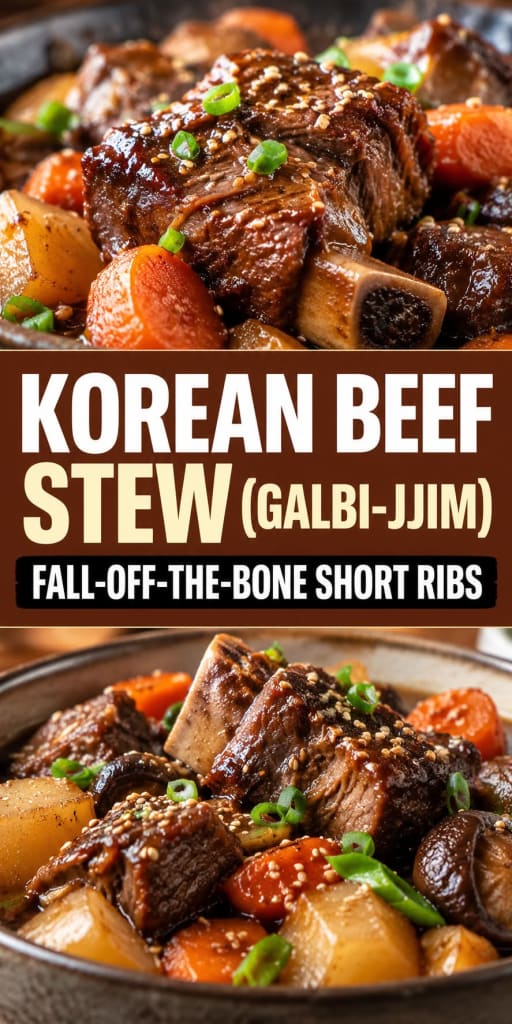
What makes this Korean beef stew so special? The magic lies in slow braising. Beef short ribs gradually become incredibly tender while absorbing the flavors of soy sauce, garlic, ginger, sesame oil, and naturally sweet fruit.
The result is a deeply satisfying Korean comfort food recipe with glossy, flavorful sauce and vegetables that soak up every delicious drop.
Although galbi-jjim is often served during Korean holidays, celebrations, and special family gatherings, you don’t need a special occasion to make it. With straightforward preparation, familiar ingredients, and a little patience, you can create a memorable homemade Korean dinner right in your own kitchen.
This version focuses on three things: tender beef, balanced seasoning, and a sauce delicious enough to spoon over steamed rice. It’s one of those Korean food recipes that feels restaurant-worthy but rewards you with the warmth and satisfaction of home cooking.
Why You’ll Love This Korean Beef Stew Recipe
-
Incredibly tender beef: Slow braising breaks down the connective tissue in bone-in short ribs, producing succulent meat that pulls away from the bone.
-
A naturally balanced sauce: Soy sauce brings savory depth, while Asian pear or apple adds gentle sweetness without making the stew taste sugary.
-
Vegetables that absorb flavor: Carrots, Korean radish, and shiitake mushrooms become tender and soak up the rich braising liquid.
-
Perfect for make-ahead dinners: The flavors deepen as the stew rests, making leftovers especially delicious the following day.
-
A beautiful centerpiece: Glossy ribs, colorful vegetables, and a sprinkle of sesame seeds turn this Korean beef recipe into a special family meal.
The secret to getting the best results isn’t complicated equipment or expensive ingredients. It’s choosing well-marbled ribs, balancing the sauce, and giving the meat enough time to become tender.
What Is Galbi-Jjim?
Galbi-jjim is a traditional Korean braised short rib dish. The name combines galbi, meaning ribs, and jjim, referring to a steamed or braised preparation.
Unlike a typical Western beef stew, which often relies on potatoes and a thickened broth, galbi-jjim centers on substantial beef ribs coated in a concentrated, savory-sweet braising sauce.
Korean soy sauce, garlic, ginger, sesame oil, and fruit create its signature flavor. Depending on the household and occasion, cooks may add Korean radish, carrots, shiitake mushrooms, chestnuts, or other vegetables.
This Korean beef stew is especially associated with holidays, birthdays, and celebratory meals. However, the same combination of tender meat and comforting sauce makes it a wonderful weekend dinner.
Serve it with steamed rice, kimchi, and a few simple Korean side dishes for a satisfying meal.
Korean Beef Stew Recipe Highlights
Preparation: 25 minutes
Cooking: 2½–3 hours
Total: Approximately 3 hours 25 minutes, including resting time.
Cooking method: Stovetop braising
Flavor profile: Savory, gently sweet, garlicky, rich, and deeply comforting.
Ingredients for Korean Beef Stew (Galbi-Jjim)
These measurements create a balanced homemade version with tender short ribs and plenty of flavorful sauce.
-
3 lb (1.36 kg) bone-in beef short ribs
-
6 cups (1.4 liters) water, for blanching and rinsing as needed
-
2 cups (475 ml) low-sodium beef broth or water, for braising
-
½ cup (120 ml) soy sauce
-
3 tablespoons brown sugar
-
1 medium Asian pear, peeled and grated, or 1 small sweet apple
-
¼ cup (60 ml) mirin
-
8 garlic cloves, minced
-
1 tablespoon freshly grated ginger
-
1 tablespoon toasted sesame oil
-
1 tablespoon neutral cooking oil
-
1 medium Korean radish, about 12 oz (340 g), peeled and cut into large chunks
-
2 medium carrots, peeled and cut into large chunks
-
6 shiitake mushrooms, halved if large
-
½ teaspoon freshly ground black pepper
-
2 scallions, thinly sliced
-
1 teaspoon toasted sesame seeds
Optional additions: 6 peeled chestnuts or 4 pitted jujubes for a more celebratory Korean braised short rib dish.
Ingredient Notes That Make a Difference
Beef short ribs: Choose bone-in ribs with visible marbling. The fat and connective tissue contribute richness and help the meat become tender during the long braise.
Asian pear: Grated pear adds delicate sweetness and contains enzymes that can help tenderize beef. Apple is a convenient substitute, although its flavor is slightly different.
Soy sauce: Low-sodium soy sauce lets you control the seasoning as the sauce reduces. Regular soy sauce works too, but you may need less.
Korean radish: This firm white radish absorbs the braising liquid beautifully. Daikon is a suitable alternative if Korean radish isn’t available.
Mirin: This sweet Japanese cooking wine contributes mild sweetness and depth. For an alcohol-free alternative, use a little extra broth and adjust the sugar to taste.
How to Make Korean Beef Stew
Step 1: Prepare the Short Ribs
Place the beef short ribs in a large bowl of cold water for approximately 30 minutes, changing the water once if desired.
Drain the ribs, then place them in a large pot of fresh water. Bring to a boil and blanch for 5–8 minutes.
Drain and rinse the ribs under running water, removing any visible impurities from the meat and bones. Wash the pot before continuing.
This preparation helps produce a cleaner-tasting braising liquid and a more attractive finished sauce.
Step 2: Make the Korean Braising Sauce
In a bowl, whisk together the soy sauce, brown sugar, grated Asian pear, mirin, minced garlic, grated ginger, sesame oil, and black pepper.
The mixture should taste savory first, followed by gentle sweetness and aromatic garlic.
Don’t worry if it tastes stronger than a finished sauce at this stage. It will mingle with the beef juices and broth as everything cooks.
Step 3: Brown the Beef
Heat the neutral cooking oil in a heavy Dutch oven or large, sturdy pot over medium-high heat.
Pat the blanched ribs dry and brown them in batches for approximately 2–3 minutes per side.
Avoid crowding the pot. Proper browning creates extra savory flavor that carries through the entire Korean beef stew.
Return all the ribs to the pot once browned.
Step 4: Begin the Slow Braise
Pour the prepared sauce over the ribs, then add 2 cups (475 ml) of beef broth or water.
Bring the liquid to a gentle simmer, then cover and reduce the heat to low.
Cook for approximately 1½–2 hours, turning the ribs occasionally. Maintain a gentle simmer rather than a rolling boil.
The meat should gradually soften as the sauce develops its deep, savory flavor. Add a little hot water if the liquid reduces too quickly.
Step 5: Add the Vegetables
Add the Korean radish, carrots, and shiitake mushrooms once the ribs have started becoming tender.
Cover and continue simmering for another 45–60 minutes, or until the meat is very tender and the vegetables are cooked through.
Check the ribs with a fork. The meat should pull away easily from the bone without becoming completely mushy.
If the vegetables soften before the beef is ready, remove them temporarily and return them to the pot near the end.
Step 6: Finish the Sauce
Remove the lid for the final 10–15 minutes and allow the sauce to reduce gently.
Turn the ribs occasionally so they become coated in the glossy braising liquid. Taste and adjust the seasoning with a little additional soy sauce or water if needed.
For a less greasy finish, skim excess fat from the surface before serving.
Scatter sliced scallions and toasted sesame seeds over the finished Korean beef stew.
Step 7: Serve and Enjoy
Transfer the short ribs and vegetables to a serving platter, spooning plenty of sauce over everything.
Serve hot with steamed white rice, kimchi, and your favorite Korean side dishes. The rice is particularly good for soaking up the sweet-savory sauce.
For a special dinner, arrange the ribs in the center and surround them with the colorful vegetables for an inviting, family-style presentation.
Pro Tips for the Best Galbi-Jjim
1. Give the Beef Enough Time
The biggest mistake with braised short ribs is stopping the cooking too early. Beef can be safe to eat before it reaches the tender texture galbi-jjim is known for.
If the meat still feels firm, continue cooking in 15–20-minute intervals until it becomes fork-tender.
2. Keep the Simmer Gentle
A vigorous boil can cause the meat to tighten and the liquid to reduce too quickly.
Low, steady heat gives the connective tissue time to soften and allows the sauce to develop without scorching.
3. Add Vegetables at the Right Time
Carrots and Korean radish need less time than the beef. Adding them later helps preserve their shape and prevents them from disintegrating into the sauce.
Cut them into generous chunks so they hold together during braising.
4. Balance the Sauce Before Serving
The sauce becomes more concentrated as it reduces. Taste it toward the end rather than adding extra soy sauce too early.
If it becomes too salty or sweet, add a splash of water or unsalted broth. If it’s too thin, simmer uncovered for a few extra minutes.
5. Make It Ahead
Cool leftovers promptly and refrigerate them in a covered container within two hours of cooking.
The next day, skim any solidified fat from the surface and reheat the stew thoroughly, adding a splash of water if needed. Refrigerated leftovers are generally best enjoyed within 3–4 days.
What to Serve With Korean Beef Stew
Galbi-jjim is rich and savory, so fresh, tangy, or lightly seasoned sides make the meal feel more balanced.
-
Steamed jasmine or short-grain rice: Perfect for absorbing the glossy sauce.
-
Kimchi: Its acidity and gentle heat contrast beautifully with the rich beef.
-
Cucumber salad: A crisp, refreshing side adds welcome texture.
-
Korean spinach side dish: Lightly seasoned spinach offers a fresh, savory accompaniment.
-
Steamed greens: Broccoli or bok choy provides a simple vegetable option.
These pairings turn a pot of Korean braised short ribs into a complete dinner without requiring several complicated recipes.
Frequently Asked Questions
Can I make Korean beef stew in a slow cooker?
Yes. After blanching and browning the ribs, transfer them to a slow cooker with the sauce and broth. Cook on LOW for approximately 7–8 hours, adding the vegetables during the final 2–3 hours when possible.
Cooking times vary by appliance and rib size, so check that the meat is tender before serving. For a thicker sauce, reduce the braising liquid separately on the stovetop.
Can I use boneless beef short ribs?
Yes. Boneless short ribs can work well, but they may cook faster and lack some of the richness contributed by the bones. Start checking tenderness earlier and adjust the cooking time accordingly.
Is Korean beef stew spicy?
Traditional galbi-jjim is generally savory and sweet rather than spicy. This recipe doesn’t require chili paste or chili powder, making it a family-friendly option.
For a little heat, serve sliced fresh chili or gochujang on the side.
Can I freeze leftovers?
Yes. Cool the stew, divide it into airtight freezer-safe containers, and freeze for up to three months for best quality.
Thaw overnight in the refrigerator and reheat thoroughly. The vegetables may become softer after freezing, but the beef and sauce should remain delicious.
Nutrition Information
Estimated nutrition per serving, assuming six servings and including an approximate portion of beef, vegetables, and sauce:
| Nutrient | Approximate amount |
|---|---|
| Calories | 650 kcal |
| Protein | 39 g |
| Carbohydrates | 25 g |
| Total fat | 41 g |
| Saturated fat | 16 g |
| Fiber | 4 g |
| Total sugars | 15 g |
| Sodium | 1,050 mg |
Nutrition values are estimates and will vary depending on the fat content of the ribs, the amount of sauce consumed, and the brands of ingredients used. Serving the stew with rice will increase the total calories and carbohydrates.
Wrapping Up: Your New Favorite Korean Comfort Food
Korean Beef Stew (Galbi-Jjim) is proof that a handful of well-chosen ingredients and a little patience can create something extraordinary.
The slow-braised short ribs become wonderfully tender, the vegetables soak up the aromatic sauce, and the combination of garlic, soy, ginger, and pear delivers the unmistakable sweet-savory flavor that makes this Korean comfort food so memorable.
Whether you’re exploring Korean food recipes for the first time or adding another favorite to your collection of homemade beef stew recipes, this dish is worth making.
Prepare it for a cozy Sunday dinner, a family celebration, or a meal you can enjoy again the following day. Serve it with steaming rice, add a few refreshing Korean side dishes, and let everyone dig in.
Give this galbi-jjim recipe a try! I’d love to hear how your short ribs turn out and which vegetables you added. Save the recipe to your Korean dinner ideas, share your results, and subscribe to the newsletter for more comforting, flavor-packed recipes to make at home.
