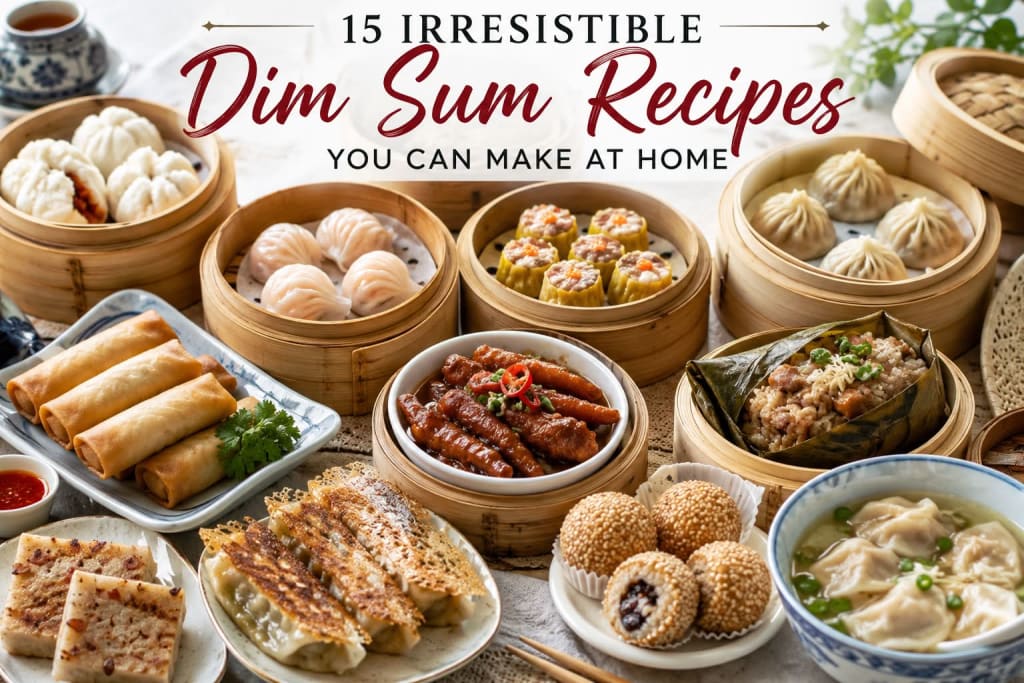
Dim sum recipes are the perfect way to bring the fun, variety, and irresistible flavors of a Cantonese-style meal right into your own kitchen. Think delicate shrimp dumplings, fluffy BBQ pork buns, crispy spring rolls, juicy potstickers, silky rice noodle rolls, and comforting wonton soup—all those little dishes that make dim sum feel like an occasion.
Traditionally enjoyed in Cantonese restaurants, dim sum is much more than a collection of appetizers. It is a social style of eating where family and friends gather around the table, sharing small plates and discovering something delicious with every bite. That makes homemade dim sum especially fun because you can create your own little feast without needing a restaurant reservation.
And honestly, you don’t have to master everything at once.
Some dishes involve pleating and steaming, while others are surprisingly straightforward. The recipes in this collection include simplified techniques, make-ahead ideas, steaming tips, frying methods, and plenty of guidance for getting those restaurant-style textures at home.
Whether you’re planning a Chinese New Year gathering, a weekend family brunch, an Asian-inspired dinner, or simply craving homemade dumplings, these popular dim sum dishes give you plenty of delicious options to try.
What Makes Homemade Dim Sum So Special?
One of my favorite things about dim sum is the incredible variety. A single meal can include something crispy, something steamed, something savory, something sweet, and something wonderfully comforting.
You’ll find tender shrimp dumplings with translucent wrappers, springy siu mai filled with pork and shrimp, fluffy char siu bao, crispy pan-fried dumplings, sticky rice wrapped in fragrant leaves, and even creamy custard-filled buns.
This variety is also what makes these Chinese recipes so appealing for home cooks. You can choose one recipe for a quick weekend project or prepare several dishes for a full homemade dim sum spread.
The key is not to think of dim sum as one giant cooking project. Choose a few complementary dishes, prep your fillings ahead of time, and work through the recipes at your own pace.
1. Har Gow — Crystal Shrimp Dumplings
Har Gow, or crystal shrimp dumplings, is one of those dim sum dishes that immediately catches your eye.
The translucent wrapper gives you a glimpse of the juicy shrimp filling inside, while the delicate dumpling skin provides a slightly chewy contrast to the tender seafood.
The filling is typically centered around fresh shrimp, aromatics, and simple seasonings, allowing the natural sweetness of the shrimp to shine.
The tricky part is the wrapper and pleating technique, but don’t let that put you off. Once you understand how to handle the dough and shape the dumplings, making homemade har gow becomes much less intimidating.
Serve these steamed shrimp dumplings hot with your favorite dipping sauce for an impressive homemade dim sum experience.
2. Cheung Fun — Steamed Rice Noodle Rolls
Smooth, slippery, tender and incredibly satisfying, Cheung Fun is a must-try for anyone who loves authentic Chinese food.
These steamed rice noodle rolls are made from a thin batter that transforms into delicate sheets when steamed. They can be filled with different savory ingredients and finished with a flavorful dipping sauce.
The secret is getting the batter consistency right and steaming the noodles evenly.
Because Cheung Fun is softer and more delicate than many dumpling recipes, having your steaming setup ready before you begin makes the process much easier.
It’s a wonderful choice when you want to try something a little different from traditional dumplings.
3. Siu Mai — Open-Top Steamed Dumplings
Siu Mai, also known as shumai, is one of the easiest dim sum recipes to recognize.
Unlike completely enclosed dumplings, these little parcels have an open top that showcases their delicious filling. A traditional version combines pork and shrimp with aromatic seasonings for a juicy, springy texture.
The wrappers are filled, gathered around the sides and steamed until tender.
Siu mai are particularly good for entertaining because they can be assembled ahead of time and steamed shortly before serving. Arrange them on a bamboo steamer and you’ve instantly created that classic dim sum restaurant feeling at home.
4. Lo Mai Gai — Sticky Rice Chicken
Lo Mai Gai combines sticky rice, tender chicken and fragrant seasonings in one wonderfully comforting package.
The rice develops a rich, chewy texture as it steams, while the chicken adds savory flavor. Wrapping everything in aromatic leaves gives the dish its unmistakable fragrance.
This is a particularly lovely choice for festive meals and family gatherings.
Because sticky rice benefits from preparation ahead of time, Lo Mai Gai can also be a smart addition to a larger homemade Chinese feast.
5. Xiao Long Bao — Soup Dumplings
Few dumplings create quite as much excitement as Xiao Long Bao.
These famous soup dumplings contain a delicate wrapper surrounding a juicy filling and flavorful broth. When you bite into one, the hot soup inside creates that signature restaurant-style experience.
Making soup dumplings from scratch does require patience. The dough needs to be thin but strong enough to hold the filling, and careful pleating is essential.
The reward, however, is enormous.
For the best experience, serve Xiao Long Bao immediately after steaming and handle them gently.
6. Chinese Spring Rolls
Crispy Chinese spring rolls are practically impossible to resist.
This version features a savory pork and vegetable filling wrapped in a thin pastry wrapper before being cooked until beautifully crisp.
One of the biggest advantages is that you can choose between deep-frying and air-frying, depending on your preferred cooking method.
The goal is a filling that isn’t overly wet, because excess moisture can make spring rolls soggy rather than crisp.
For a vegetarian or vegan-friendly option, a tofu and vegetable filling works beautifully too.
7. Steamed Ribs With Black Beans
Steamed pork ribs with fermented black beans deliver a completely different dim sum experience.
Instead of crispy wrappers or fluffy dough, you get bite-sized pieces of succulent pork packed with savory, garlicky, earthy and umami-rich flavors.
Fermented black beans are the ingredient that really gives this dish its distinctive character.
Steaming allows the ribs to become wonderfully tender while keeping all those aromatic flavors concentrated in the dish.
If you’re building a larger dim sum spread, these ribs add a hearty savory option alongside lighter dumplings.
8. Char Siu Bao — BBQ Pork Buns
Fluffy Char Siu Bao are another dim sum favorite that feels almost magical when you make them at home.
The buns have a soft, cotton-like texture, while the center contains sweet-savory BBQ pork filling.
Getting the dough right is the key to those beautifully fluffy buns. Give the dough enough time to develop and rise, and avoid rushing the steaming process.
They’re especially delicious served warm, when the soft bun and saucy char siu filling are at their best.
9. Lo Bak Go — Chinese Turnip Cake
Lo Bak Go, or Chinese turnip cake, is a classic dim sum dish with a wonderfully soft and slightly gooey interior.
It has a deeply savory, fragrant flavor and is especially popular during festive occasions such as Chinese New Year.
Although the name might sound unusual if you’ve never tried it, this is one of those traditional Chinese dishes that quickly becomes a favorite once you taste it.
The cake can be prepared ahead of time, making it particularly useful when you’re planning a larger meal.
10. Dim Sum-Style Chicken Feet
Chicken feet are a classic Cantonese dim sum delicacy and are prized for their incredibly tender texture and rich, savory flavor.
They’re prepared with aromatic seasonings and cooked until soft and flavorful.
This is definitely one for adventurous eaters, but it’s also a great example of how traditional dim sum celebrates ingredients and textures that aren’t always featured in Western cooking.
If you’ve never tried them before, homemade chicken feet are an interesting way to explore a more traditional side of Cantonese cuisine.
11. Chinese Congee
Congee may look simple, but this humble rice porridge plays an important role in Chinese food culture.
Slowly cooked rice transforms into a creamy, comforting porridge that makes an excellent base for savory toppings.
The beauty of congee is its flexibility. You can keep it simple with seasonings and garnishes or build a heartier bowl with meat, seafood, eggs, vegetables, ginger, spring onions and other toppings.
It’s also an excellent make-ahead breakfast or comforting meal when you’re craving something warm and nourishing.
12. Steamed Custard Buns
For something sweet, steamed custard buns are a dreamy addition to your homemade dim sum menu.
Known as Nai Wong Bao, these fluffy buns contain a creamy egg-and-milk custard filling.
The contrast between the cloud-like steamed bun and rich custard center makes these especially satisfying.
They’re also a fantastic reminder that dim sum isn’t just about savory dumplings. A complete spread can move effortlessly from savory dishes into sweet treats.
13. Sesame Balls
Sesame balls, or Jian Dui, are little golden treats made from chewy glutinous rice dough, usually filled with sweet red bean paste and coated generously with sesame seeds.
Once cooked, they develop a crisp exterior while remaining wonderfully chewy and gooey inside.
The texture is what makes them so addictive.
They’re also visually beautiful, making them an excellent choice when you’re preparing food for guests and want something that looks just as exciting as it tastes.
14. Crispy Chicken Potstickers
Potstickers are one of my favorite choices for home cooks because they combine two irresistible textures: tender dumpling wrappers and a beautifully crisp, golden underside.
Chicken potstickers are filled, pleated and pan-fried before water is added to steam the dumplings through.
The result is that iconic crispy skirt around the base.
Serve them with a simple soy-based dipping sauce, chili oil or your favorite dumpling sauce for an easy appetizer or satisfying meal.
15. Wonton Soup
When you want something comforting, wonton soup is hard to beat.
Juicy wontons are cooked until tender and served in a flavorful, umami-rich broth. The slippery wrappers and savory filling make every spoonful satisfying.
Unlike some of the more technical dim sum dishes, wonton soup can easily become a complete meal.
Add vegetables, noodles, spring onions or other toppings to make it even heartier.
It’s one of those Chinese comfort food recipes you’ll want to keep in your regular dinner rotation.
Pro Tips for Making Dim Sum at Home
1. Prep your fillings first.
Many dim sum recipes become much easier when the fillings are ready before you start assembling. Chop, season and portion everything first so you’re not trying to multitask while handling delicate wrappers.
2. Don’t overfill dumplings.
It can be tempting to add as much filling as possible, but overfilled dumplings are difficult to seal and may burst during steaming. A modest amount of filling gives you more control and creates a cleaner shape.
3. Keep wrappers covered.
Dumpling and spring roll wrappers can dry out surprisingly quickly. Keep unused wrappers covered with a slightly damp kitchen towel while you work.
4. Give your steamer enough room.
Avoid overcrowding. Steam needs to circulate around each dumpling or bun, so leaving a little space between pieces helps them cook evenly.
5. Make components ahead.
Dim sum is perfect for batch cooking. Prepare fillings, sauces and certain dumplings in advance, then steam or fry them when you’re ready to eat.
How to Build a Homemade Dim Sum Feast
The best part about making dim sum at home is that you don’t need to prepare all 15 recipes.
Start with three or four dishes that offer different textures. For example, pair steamed har gow with crispy potstickers, fluffy char siu bao and a bowl of wonton soup.
Want something more festive? Add spring rolls, siu mai and sesame balls.
For a larger family gathering, prepare several dumplings ahead of time and cook them in batches. Serve everything in small portions so everyone can sample a little of everything.
And don’t forget the dipping sauces. Soy sauce, chili oil, vinegar-based sauces and aromatic condiments can completely change the experience of a simple dumpling.
Why These Dim Sum Recipes Belong in Your Recipe Collection
Making dim sum at home is part cooking project, part cultural experience and part excuse to gather everyone around the table.
You get the satisfaction of pleating your own dumplings, steaming fluffy buns, frying crispy spring rolls and watching simple ingredients transform into something genuinely special.
Best of all, these recipes give you plenty of flexibility. Start with an approachable favorite such as spring rolls, potstickers or congee, then work your way toward more technical dishes such as har gow and Xiao Long Bao.
Whether you’re planning a weekend dim sum brunch, Chinese New Year celebration, family dinner or simply want to expand your collection of easy Asian recipes, there’s something here for every level of home cook.
So grab your bamboo steamer, dust off those dumpling wrappers and get ready to create your own little dim sum feast.
Which dim sum recipe would you make first? Share your homemade creations, tell me which dish became your favorite, and don’t forget to save this collection so you can come back whenever your next Chinese food craving hits!
