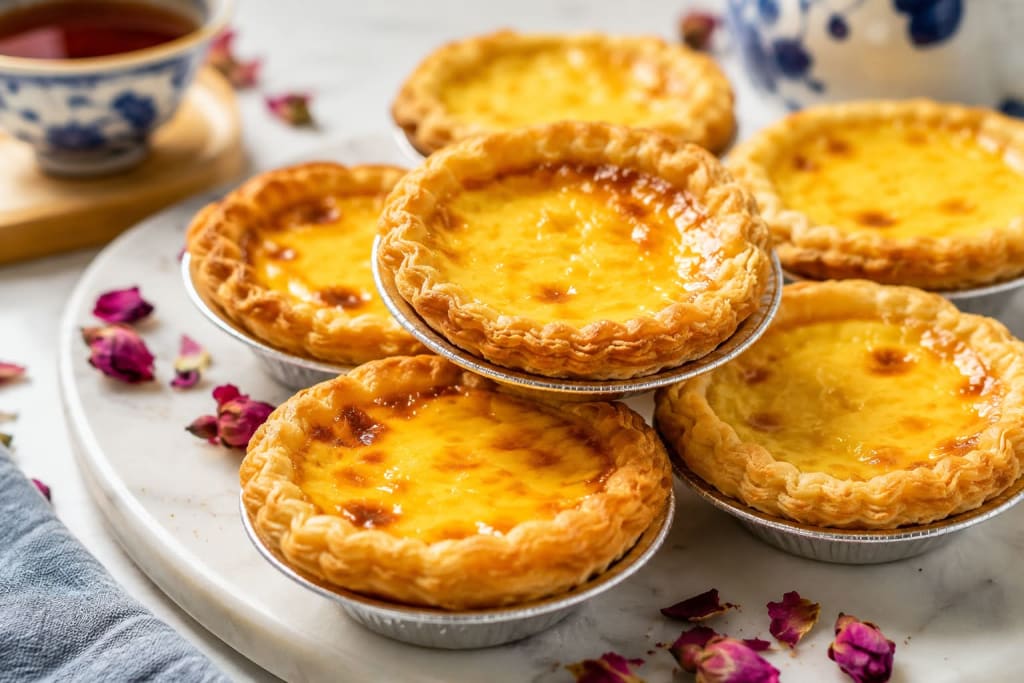
Chinese egg tarts are one of those wonderfully simple desserts that somehow taste far more impressive than the ingredients suggest. With a silky baked egg custard nestled inside buttery, flaky pastry, this classic Chinese dessert is creamy, delicate, lightly sweet, and completely irresistible when served warm.
I first discovered just how special these little custard tarts can be after hearing about how popular they are in China and Hong Kong. They’re a familiar sight in Chinese bakeries, dim sum restaurants, and pastry counters, and they’re especially beloved as an easy sweet treat alongside tea.
What makes this Chinese egg tart recipe so appealing for home cooks is that the filling is incredibly straightforward. You need eggs, sugar, evaporated milk, vanilla, and water. That’s it. The pastry takes a little more attention, but you can absolutely simplify things by using store-bought puff pastry or pie crust.
The result is a beautiful dessert with a smooth, almost glass-like custard surface and just enough wobble in the center to let you know it’s perfectly baked. Think of it as the delicious meeting point between a classic egg custard, a custard tart, and the beloved Hong Kong-style egg tart.
And honestly? These are exactly the sort of little desserts I love making when I want something homemade without an enormous shopping list.
Why You’ll Love This Chinese Egg Tart Recipe
There’s something incredibly comforting about an old-fashioned baked custard. It doesn’t rely on complicated techniques or dozens of ingredients. Instead, the magic comes from getting a few simple details right.
These Hong Kong egg tarts are:
- Creamy and silky inside
- Buttery and flaky around the edges
- Lightly sweet rather than overwhelmingly sugary
- Made with simple pantry and refrigerator staples
- Perfect for afternoon tea
- Wonderful for dim sum-inspired gatherings
- Easy to customize with different flavors
- Delicious warm or at room temperature
The filling also uses whole eggs, which means there’s no need to separate the whites and then wonder what on earth you’re going to do with them later.
That alone makes this an excellent easy egg custard recipe for beginners.
A Little History Behind Chinese Egg Tarts
Chinese egg tarts have an interesting culinary history because they reflect the blending of different food traditions.
The pastry-style egg tart became particularly associated with Hong Kong, where bakeries and tea shops helped make these little treats enormously popular. The pastry is often linked to British-style custard tarts, while another influence is thought to have come from Portuguese-style pastries that made their way to Guangzhou centuries ago.
Today, Hong Kong egg tarts are a beloved part of Chinese bakery culture and are commonly enjoyed as a sweet snack or alongside tea.
They’re also closely related to the wider family of baked custards found around the world. Creme brûlée, crème caramel, and traditional egg custard all share that same basic idea: eggs transform a simple liquid mixture into something wonderfully creamy and set.
That’s part of the charm of this Chinese dessert recipe. It feels both familiar and completely different at the same time.
The Simple Ingredients You’ll Need
The filling for these baked egg custard tarts couldn’t be easier.
For the pastry, you’ll need:
- 2 cups all-purpose flour, fluffed and scooped
- ⅛ teaspoon salt
- 1 tablespoon sugar
- 12 tablespoons unsalted butter, at room temperature
- 2 tablespoons cold water, plus more if needed
For the custard:
- 1 cup hot water
- ½ cup granulated sugar
- 3 large eggs, at room temperature
- ½ cup evaporated milk, at room temperature
- ¾ teaspoon vanilla extract
The evaporated milk is particularly useful here because it gives the custard a lovely creamy texture without making the filling overly heavy.
And don’t worry about making this taste like a fancy restaurant dessert. Vanilla is really all you need. The simplicity is part of what makes this baked egg custard recipe so good.
How to Make Chinese Egg Tarts
Start by preparing the flaky pastry.
Combine the flour, salt, and sugar in a bowl. Add the room-temperature butter and work it into the flour using your fingers or a pastry blender. You want to retain little pea-sized pieces of butter throughout the dough.
Those little butter pockets are your friends. They help create flaky layers as the pastry bakes.
Add the cold water and gently bring everything together into a dough. Depending on how dry your kitchen is, you may need a little additional water. Don’t overwork it.
Cover the dough and refrigerate for about 20 minutes.
Next, turn the dough onto a lightly floured surface and gently form it into a rectangle. Roll it into a long rectangle approximately 6 x 15 inches.
Fold the top portion toward the center and then fold the bottom portion up over it, creating an envelope-style fold. Turn the dough a quarter turn and repeat the rolling and folding process.
Wrap the dough and refrigerate it for another 30 minutes.
While the pastry rests, make the custard.
Dissolve the sugar in the hot water, stirring until completely dissolved. This creates a simple sugar syrup. The most important part is allowing it to cool completely to room temperature before combining it with the eggs.
You don’t want hot syrup accidentally cooking your eggs.
In another bowl, gently whisk the eggs and evaporated milk together. Don’t whisk aggressively because you don’t want to introduce lots of air bubbles.
Add the cooled sugar water and vanilla extract and gently combine.
Now comes one of the most important steps: strain the custard.
Pour the mixture through a very fine mesh strainer. This removes tiny pieces of egg and helps eliminate bubbles, giving your finished egg tarts that gorgeous smooth, glossy surface.
You should have approximately 2¼ cups of custard.
Preheat your oven to 375°F and position a rack in the lower third.
Roll the pastry thinly and cut approximately 4-inch circles. Press the pastry into your tart pans or muffin pan, then crimp the edges.
Carefully ladle the custard into each pastry shell until it reaches just below the outer edge.
Place the tarts on a baking sheet and put them into the oven. Immediately reduce the temperature to 350°F.
Bake for approximately 25–26 minutes, or until the custard is just set.
The center should have only a very slight wobble. You don’t want the filling to look completely liquid, but you also don’t want to bake it until it’s firm and rubbery.
Allow the tarts to cool for several minutes before serving.
Pro Tips for Perfect Chinese Egg Tarts
1. Cool the sugar syrup completely
This is probably the most important custard tip. After dissolving the sugar in hot water, let the mixture return to room temperature before adding it to your eggs.
Adding hot syrup too soon can partially cook the eggs and leave you with a less-than-smooth custard.
2. Don’t over-whisk the eggs
Gentle whisking is the way to go. Excessive whisking creates bubbles, and those bubbles can show up on the surface of your finished custard.
For beautifully smooth Chinese egg custard, slow and gentle wins.
3. Never skip the straining step
It might feel like an unnecessary extra step, but straining the custard makes a noticeable difference.
A fine mesh strainer removes little pieces of egg and catches bubbles, helping you achieve that smooth, polished appearance associated with bakery-style egg tarts.
4. Watch the oven temperature
Start the oven at 375°F, then reduce it to 350°F immediately after putting the tarts inside.
The goal is a custard that’s gently baked rather than aggressively cooked. Overbaking can make the filling firm and rubbery instead of soft and creamy.
5. Keep those butter pieces in the pastry
When making the homemade crust, don’t completely blend the butter into the flour.
Those small chunks of butter create flaky layers as the pastry bakes. In other words, don’t panic when your dough looks like it still has visible streaks of butter.
That’s exactly what you want.
Easy Ways to Change the Flavor
One of my favorite things about a basic egg custard tart recipe is how easily you can customize it.
Vanilla gives you a classic flavor, but you can experiment with almond extract, coffee extract, or even a little lemon flavoring.
For a warmer, more aromatic dessert, try lightly sprinkling the finished tarts with cinnamon, nutmeg, or pumpkin pie spice.
You could even add a delicate scattering of edible rose petals after baking for a pretty presentation, especially if you’re serving these for afternoon tea or a special gathering.
And if you don’t want to make pastry from scratch, don’t let that stop you.
Small squares of puff pastry can be pressed into muffin tins without pre-baking. You can also experiment with store-bought pie crust.
Prefer a crustless dessert? Simply pour the custard into 6-ounce custard cups and bake it gently in a hot water bath.
That gives you a simple baked custard dessert without the pastry at all.
When to Serve Chinese Egg Tarts
These little tarts are fantastic for afternoon tea, dessert after a Chinese-inspired meal, or as part of a dim sum-style spread.
They’re also a lovely choice for Chinese New Year celebrations, particularly when you’re putting together a selection of small sweets for family and friends.
Serve them warm for the softest, most comforting experience, although they’re also perfectly delicious at room temperature.
And if you’re making a batch for guests, don’t be surprised if they disappear quickly. There’s something about a miniature pastry filled with creamy vanilla custard that makes everyone reach for “just one more.”
Final Thoughts
This Chinese egg tart recipe proves that an impressive dessert doesn’t need to be complicated.
The custard itself takes only a handful of ingredients, and once you’ve mastered the simple techniques—cooling the sugar syrup, gently mixing the eggs, straining the filling, and watching the baking time—you’ll have a wonderfully versatile dessert you can make again and again.
I especially love that you can choose your own adventure here. Make flaky homemade pastry when you’re in the mood for a baking project, use puff pastry when you want something easier, or skip the crust completely for a simple baked custard.
However you make them, these creamy Hong Kong-style egg tarts are such a lovely example of how simple ingredients can create something genuinely special.
So grab your eggs, evaporated milk, sugar, and vanilla, and give these classic Chinese custard tarts a try. I’d love to hear how yours turn out!
Made a batch? Share your results, save this recipe for your next baking day, and sign up for the newsletter for more comforting homemade dessert recipes delivered straight to your inbox.
