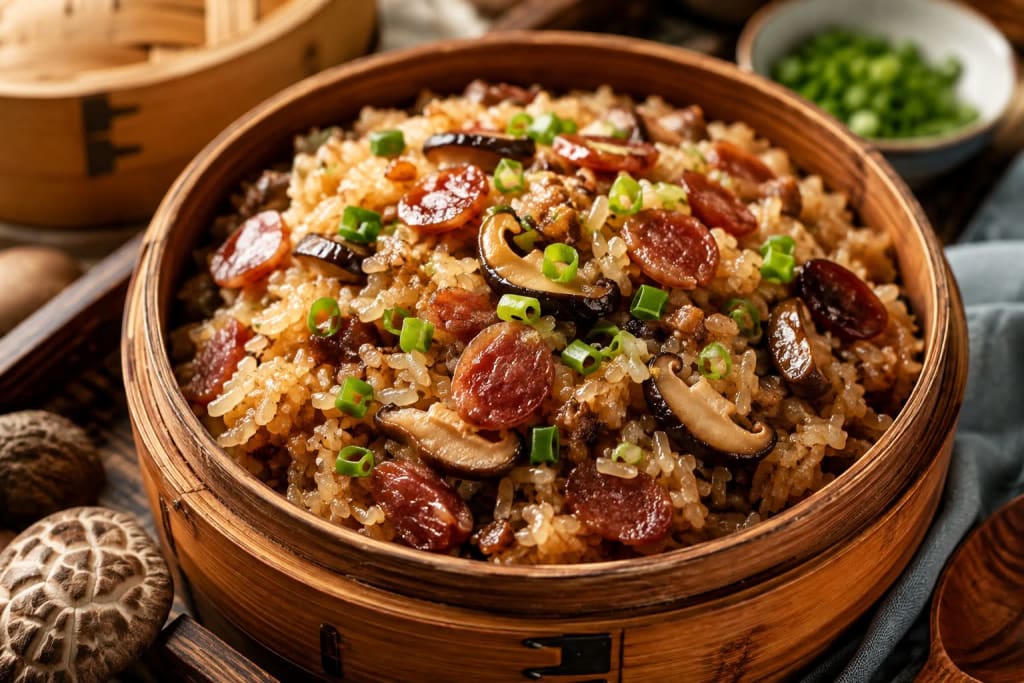
Traditional Chinese sticky rice is one of those wonderfully comforting dishes that turns simple pantry ingredients into something that feels genuinely special. This Chinese Sticky Rice recipe combines chewy, fragrant glutinous rice with Chinese sausage, earthy mushrooms, and savory Cantonese seasonings for a dish that is incredibly satisfying from the very first bite.
Known for its place in Cantonese cooking and often enjoyed as a dim sum favorite, sticky rice is also a popular choice for family meals, celebrations, festive gatherings, and other occasions when you want something hearty and comforting. The combination of sticky rice, rich Chinese sausage, and mushrooms creates layers of flavor without requiring complicated cooking techniques.
What I especially love about this traditional Chinese sticky rice recipe is how beautifully the ingredients work together. The glutinous rice becomes wonderfully chewy and tender, while the Chinese sausage brings a slightly sweet, savory richness. Mushrooms add an earthy depth, and the seasonings pull everything together into that unmistakable Cantonese flavor.
It is also a brilliant recipe for home cooks who want to explore easy Asian recipes without spending hours in the kitchen. Once your ingredients are prepared, the cooking process is wonderfully straightforward. It is the kind of dish you can make for a cozy family dinner, add to a dim sum-inspired spread, or prepare ahead for easy meal prep.
If you’re building a collection of Chinese recipes, this one absolutely deserves a place in it. It delivers that satisfying combination of texture, aroma, and savory flavor that makes Chinese comfort food so irresistible.
Why You’ll Love This Chinese Sticky Rice Recipe
There is a reason sticky rice appears again and again in Cantonese food traditions. The texture alone makes it completely different from ordinary steamed rice.
Glutinous rice has a naturally sticky, chewy texture when cooked correctly, giving every spoonful a substantial bite. Rather than being fluffy and separate like long-grain rice, the grains cling together and create a rich, cohesive dish that carries the seasonings beautifully.
The addition of Chinese sausage takes things to another level. Its savory-sweet flavor infuses the rice while cooking, creating little bursts of richness throughout the dish. Dried or fresh mushrooms add an earthy, umami-rich note that balances the sweetness of the sausage.
This is why Chinese sticky rice works so well as both a comforting family meal and part of a larger Cantonese-inspired feast.
It’s also incredibly versatile. Serve it alongside other dim sum recipes, make it the centerpiece of an Asian comfort food dinner, or portion it into containers for an easy make-ahead lunch.
Traditional Chinese Sticky Rice Recipe
Prep Time: 20 minutes
Soaking Time: 4–6 hours
Cook Time: 45–55 minutes
Total Time: About 5 hours
Servings: 6
Ingredients
- 2 cups glutinous (sticky) rice
- 3 Chinese sausages (lap cheong), thinly sliced
- 6 dried shiitake mushrooms
- 2 tablespoons vegetable oil
- 2 cloves garlic, finely minced
- 1 tablespoon light soy sauce
- 1 tablespoon oyster sauce
- 1 teaspoon dark soy sauce
- 1 teaspoon toasted sesame oil
- ½ teaspoon white pepper
- ½ teaspoon sugar
- ½ cup chicken stock or mushroom soaking liquid
- 2 spring onions, finely sliced
- 1 tablespoon toasted sesame seeds, optional
Instructions
1. Soak the sticky rice.
Place the glutinous rice in a large bowl and cover generously with cold water. Let it soak for 4–6 hours, or preferably overnight. This helps the grains soften and cook evenly.
2. Prepare the mushrooms.
Place the dried shiitake mushrooms in a bowl and cover with warm water. Leave them to soak for approximately 20–30 minutes, or until tender. Squeeze out the excess liquid, remove the stems, and finely slice the mushrooms. Reserve the soaking liquid if using it for the rice.
3. Prepare the Chinese sausage.
Slice the Chinese sausage into thin rounds or small pieces. Keep the pieces fairly small so the rich sausage flavor gets distributed throughout the sticky rice.
4. Drain the rice.
Once soaked, drain the glutinous rice thoroughly. Give it a good shake in the colander to remove excess water.
5. Cook the sausage and mushrooms.
Heat the vegetable oil in a large skillet or wok over medium heat. Add the sliced Chinese sausage and cook for 2–3 minutes, allowing some of its flavorful oils to release.
Add the minced garlic and sliced shiitake mushrooms. Stir-fry for another 2 minutes, until fragrant.
6. Add the seasonings.
Pour in the light soy sauce, oyster sauce, dark soy sauce, sesame oil, white pepper, and sugar. Stir everything together until the sausage and mushrooms are evenly coated.
7. Add the sticky rice.
Add the drained glutinous rice to the skillet and toss gently with the sausage and mushrooms. Stir for approximately 2–3 minutes, allowing the rice to absorb some of the savory flavors.
8. Add the cooking liquid.
Pour in the chicken stock or reserved mushroom soaking liquid. Stir gently to combine. The liquid should moisten the rice without making it excessively watery.
9. Steam the sticky rice.
Transfer the mixture to a heatproof dish or steaming tray. Place it in a steamer and steam over medium-high heat for approximately 35–45 minutes, or until the sticky rice is tender and chewy.
Check the rice toward the end of cooking. If it seems dry before becoming tender, sprinkle over a small amount of additional hot water or stock.
10. Finish and serve.
Once the rice is tender, carefully remove it from the steamer. Fluff and gently stir through the mixture, then scatter over the sliced spring onions and toasted sesame seeds.
Serve hot and enjoy this delicious Cantonese-style comfort food!
Recipe Notes
- Don’t skip soaking the glutinous rice. It makes a huge difference to the final texture.
- Use mushroom soaking liquid instead of plain water when possible for an extra layer of earthy umami flavor.
- Chinese sausage is naturally quite salty and flavorful, so taste before adding extra soy sauce.
- For a richer version, add diced cooked chicken, shrimp, or Chinese BBQ pork.
- Leftovers can be refrigerated in an airtight container and reheated thoroughly the next day.
- For an authentic dim sum-style presentation, serve the sticky rice in small bowls or portions alongside other Cantonese dishes.
Quick Recipe Summary
Soak → prepare mushrooms → slice sausage → stir-fry sausage and mushrooms → season → add sticky rice → steam → garnish → serve.
The result is chewy, savory, fragrant Chinese sticky rice loaded with Chinese sausage and shiitake mushrooms — exactly the kind of comforting Cantonese dish that makes a homemade Asian feast feel extra special.
What Does Chinese Sticky Rice Taste Like?
Chinese sticky rice has a wonderfully balanced flavor profile.
The glutinous rice itself is mild, allowing the other ingredients to shine. Chinese sausage adds a savory sweetness with a rich, slightly smoky character, while mushrooms contribute earthy umami.
The seasonings bring saltiness and depth without overwhelming the natural flavors of the rice and toppings.
Texture is just as important as flavor here. Properly cooked sticky rice should be pleasantly chewy and cohesive rather than wet or watery. Every bite should contain a little rice, sausage, and mushroom, giving you a delicious combination of textures.
That’s part of what makes this dish such a standout among easy Asian recipes. It doesn’t rely on fiery heat or complicated sauces. Instead, it builds flavor through a small number of traditional ingredients.
Pro Tips for Perfect Cantonese Sticky Rice
1. Use the right rice.
Don’t substitute ordinary white rice if you want authentic sticky rice texture. Glutinous rice is essential because its naturally sticky, chewy consistency is what makes this Cantonese dish distinctive.
2. Give the rice enough preparation time.
If your glutinous rice requires soaking, don’t skip this step. It helps the grains hydrate properly and encourages more even cooking.
3. Cut the sausage and mushrooms evenly.
Uniform pieces distribute throughout the rice more effectively, so you get that delicious combination of ingredients in practically every bite.
4. Don’t underestimate the mushrooms.
Shiitake mushrooms bring serious umami to Chinese sticky rice. If using dried mushrooms, soaking them properly can give you both tender mushrooms and intensely flavored soaking liquid for extra depth.
5. Taste before serving.
Seasoning is easier to adjust before the final serving stage. Remember that Chinese sausage can already be quite flavorful, so add additional salty seasonings gradually.
How to Serve Chinese Sticky Rice
Chinese sticky rice is incredibly adaptable.
For a dim sum-inspired meal, serve it alongside steamed dumplings, spring rolls, stir-fried vegetables, or other Cantonese favorites. The hearty rice makes an especially satisfying contrast to lighter steamed dishes.
For family dinners, simply serve generous portions with vegetables and your favorite Chinese-inspired side dishes.
It is also an excellent option for festive meals. Sticky rice dishes are associated with celebrations in many Chinese food traditions, making this recipe particularly fitting when you’re putting together a special spread.
And don’t overlook leftovers. Once cooled and stored properly, sticky rice can make a convenient meal-prep option. Reheat it thoroughly and enjoy it for lunch or another quick meal during the week.
Why This Recipe Belongs in Your Chinese Recipe Collection
Traditional Chinese sticky rice is proof that comfort food doesn’t need to be complicated.
The combination of chewy glutinous rice, savory Chinese sausage, earthy mushrooms, and classic seasonings creates a dish that feels substantial and deeply satisfying. It is traditional enough to appeal to anyone looking for classic Cantonese flavor, yet approachable enough for home cooks trying Chinese recipes for the first time.
It also ticks so many boxes for today’s busy cooks: it can be prepared ahead, works beautifully for family dinners, fits into a dim sum-inspired menu, and makes an excellent addition to a collection of Asian comfort food recipes.
Most importantly, it is the kind of recipe people remember. That combination of fragrant rice, savory sausage, and mushrooms creates the sort of comforting flavor that makes you want another spoonful before you’ve even finished the first.
Frequently Asked Questions
Is Chinese sticky rice the same as regular rice?
No. Chinese sticky rice is typically made with glutinous rice, which has a much chewier and stickier texture than ordinary white rice.
What is Chinese sausage used in sticky rice?
Chinese sausage, commonly known as lap cheong, is a traditional ingredient that adds savory, sweet, rich flavor to the rice.
Can I make Chinese sticky rice ahead of time?
Yes. It is well suited to make-ahead meals. Store leftovers properly in the refrigerator and reheat thoroughly before serving.
What mushrooms work best?
Shiitake mushrooms are a classic choice because their earthy, umami-rich flavor pairs beautifully with Chinese sausage and glutinous rice.
What can I serve with sticky rice?
Try it with steamed vegetables, dumplings, spring rolls, stir-fries, or other dim sum recipes for a complete Cantonese-inspired meal.
Final Thoughts
This Traditional Chinese Sticky Rice recipe is the sort of dish that brings big Cantonese comfort-food flavor to your own kitchen without making you feel like you need to be a professional chef. The chewy glutinous rice, rich Chinese sausage, earthy mushrooms, and savory seasonings create a seriously satisfying combination that is perfect for family dinners, festive meals, dim sum spreads, or simple meal prep.
I love recipes like this because they feel both traditional and practical. You’re working with a handful of familiar ingredients, but the finished dish has layers of flavor and texture that make it feel much more impressive than the effort involved.
So grab your sticky rice, get those mushrooms ready, and let the Chinese sausage work its magic. Once that incredible savory aroma starts filling the kitchen, you’ll understand exactly why this classic has remained such a beloved part of Cantonese comfort food.
Made this Chinese sticky rice recipe? I’d love to hear how it turned out! Share your results, your favorite serving ideas, or any delicious twists you added. And if you love discovering easy Asian recipes and comforting family favorites, be sure to sign up for the newsletter so you don’t miss the next recipe.
