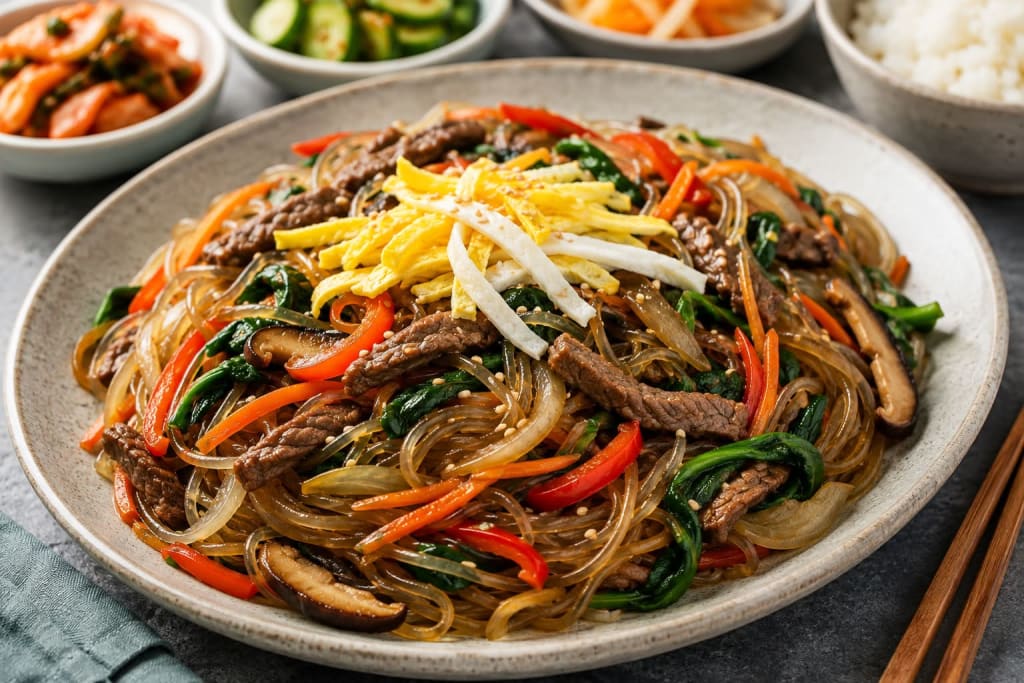
Korean Japchae recipe is one of those Korean dishes that instantly makes an ordinary dinner feel a little more special. With chewy sweet potato glass noodles, colorful vegetables, tender beef, earthy shiitake mushrooms, and a glossy sweet-and-savory sauce, this Korean glass noodle stir-fry is as beautiful as it is delicious.
Japchae, also spelled chapchae, is a beloved Korean dish traditionally enjoyed during celebrations, holidays, and family gatherings. Its colorful presentation makes it especially popular for festive meals, but honestly, you don’t need a special occasion to make it. Once you taste those bouncy Japchae noodles coated in nutty sesame oil and savory soy sauce, you’ll understand why this classic has remained so popular.
What I especially love about this recipe is the balance. You get crisp-tender vegetables, savory marinated beef, silky noodles, and just enough sweetness to bring everything together. It isn’t fiery hot, either, so it’s a wonderful introduction to Korean food recipes if you’re still exploring Korean cuisine.
And while Japchae takes a little more preparation than a typical stir-fry, don’t let that put you off. The secret is cooking the ingredients separately so each one keeps its own flavor, color, and texture. The result is a restaurant-worthy plate of Korean noodles that tastes incredibly fresh and satisfying.
What Is Japchae?
Japchae is a traditional Korean noodle dish made with translucent sweet potato starch noodles called dangmyeon. The noodles have a wonderfully springy, chewy texture that makes Japchae completely different from ordinary wheat-based noodles.
Interestingly, the original version of Japchae dates back to the 17th century and didn’t contain noodles at all. It began as a vegetable dish before evolving into the noodle-filled classic we know today.
Modern Japchae recipes usually combine glass noodles with vegetables such as carrots, spinach, onions and peppers, along with beef or another protein. A simple combination of soy sauce, sugar or honey, sesame oil and black pepper gives the dish its signature sweet-savory flavor.
Japchae is commonly served as a side dish, but it can absolutely become the star of dinner. Serve it with steamed Korean rice and a few banchan, or enjoy a generous bowl on its own for an incredibly satisfying meal.
Why You’ll Love This Japchae Recipe
There are so many reasons to keep this easy Japchae recipe in your dinner rotation.
First, it looks spectacular. The combination of golden egg, bright carrots, green spinach, red pepper and glossy noodles makes every serving incredibly colorful.
Then there’s the texture. Properly cooked sweet potato noodles should be chewy and springy rather than soft or mushy.
The flavor is another major win. The sauce combines salty soy sauce, mellow sweetness, toasted sesame oil and black pepper, while the beef and mushrooms add savory depth.
It’s also wonderfully versatile. You can serve it warm, at room temperature or even chilled, making it a great option for lunchboxes, potlucks and make-ahead meals.
Japchae Ingredients
For approximately 6–8 servings, you’ll need:
- 250g Korean sweet potato starch noodles (dangmyeon) – The essential ingredient for authentic Japchae.
- 100g rib-eye beef, thinly sliced – Tender beef adds savory richness.
- 1 carrot (about 120g) – Julienned for color and crunch.
- 110g baby spinach – Adds freshness and a gorgeous green color.
- 50g red bell pepper – Provides sweetness and vibrant color.
- ½ yellow onion (about 105g) – Adds mellow sweetness.
- 100g fresh shiitake mushrooms – Earthy mushrooms complement the beef beautifully.
For the spinach seasoning, you’ll need ¼ teaspoon salt, ½ teaspoon minced garlic and 1 teaspoon toasted sesame oil.
For the beef marinade, combine 1 tablespoon soy sauce, 1 teaspoon rice wine or mirin and ¼ teaspoon black pepper.
For the main Japchae sauce, mix 4 tablespoons soy sauce, 1 tablespoon honey, 1 tablespoon brown sugar, 1 tablespoon toasted sesame oil and ⅛ teaspoon black pepper.
Finish everything with 1 tablespoon toasted sesame seeds. An extra-large egg is optional but highly recommended for making delicate yellow and white egg strips.
How to Make Authentic Japchae
The key to great Japchae is preparation. Have everything sliced, measured and ready before you start cooking because the individual components come together quickly.
1. Marinate the Beef
Place the sliced rib-eye into a bowl and add the soy sauce, mirin and black pepper. Mix gently until the beef is evenly coated.
Set it aside while you prepare the remaining ingredients. Even this short marinating time gives the meat a deeper, more savory flavor.
2. Prepare the Vegetables
Slice the onion, carrot and red bell pepper into thin strips. Clean the shiitake mushrooms, remove the stems and slice them thinly.
Toss the mushrooms with about 1 tablespoon of the prepared Japchae sauce and leave them to absorb the flavors.
For the spinach, blanch it briefly in boiling water for around 5–10 seconds. Immediately cool it under cold running water, squeeze out the excess moisture and season with salt, garlic and sesame oil.
This quick blanch keeps the spinach vibrant rather than dull and overcooked.
3. Cook the Japchae Noodles
Bring a large pot of water to a boil and cook the sweet potato glass noodles for approximately 6–7 minutes, or according to the package instructions.
Drain and rinse the noodles under cold water. Allow them to drain thoroughly, then use kitchen scissors to cut them into manageable pieces, roughly 15–20cm long.
Toss the noodles with the remaining sauce and allow them to sit briefly before stir-frying.
Don’t skip the cutting step. Long glass noodles can become surprisingly difficult to eat, and shorter strands make the finished dish much easier to serve.
4. Cook Everything Separately
This is the step that makes this authentic Korean Japchae taste so much better.
Heat a non-stick skillet with a little cooking oil. Cook the egg white first, followed by the egg yolk, making thin omelets. Transfer them to a cutting board to cool before slicing them into fine strips.
Next, cook the onion, carrot and red pepper separately, seasoning each lightly with salt.
Then stir-fry the marinated mushrooms until tender, followed by the beef until cooked through.
Finally, add the seasoned noodles and stir-fry for a couple of minutes until they’re glossy and completely coated in the sauce.
Cooking each component individually might seem like extra work, but there’s a reason traditional Korean Japchae is prepared this way. Each ingredient reaches its ideal texture without becoming overcooked or muddying the colors of the other ingredients.
5. Bring Everything Together
Place the cooked noodles, vegetables, beef and spinach into a large mixing bowl.
Slice the cooled egg omelets into thin matchsticks and add those too.
Finish with toasted sesame seeds and a little additional sesame oil. Gently toss everything together until the noodles and vegetables are evenly coated.
If the noodles are still very hot, start mixing with tongs or salad servers before using your hands.
The finished Japchae should be glossy, colorful and beautifully fragrant.
Pro Tips for Perfect Japchae
Use pre-cut dangmyeon when possible. Korean stores often sell sweet potato noodles that have already been cut into shorter lengths. They’re much easier to manage and can save you time in the kitchen.
Don’t overcook the noodles. The chewy texture is one of the defining characteristics of Japchae. Follow the cooking instructions on your noodle package and rinse them thoroughly with cold water afterward.
Cook from light to dark. Starting with the egg, then moving through the lighter vegetables before finishing with mushrooms and beef helps prevent darker ingredients from transferring their color throughout the pan.
Multitask your prep. Japchae involves several individual components, but you can save time by boiling water for the spinach and noodles while preparing the vegetables and marinades.
Don’t drown it in sauce. The goal is glossy, flavorful noodles rather than noodles swimming in liquid. Toss everything thoroughly so the sauce lightly coats every ingredient.
Can You Make Japchae Ahead?
Yes! One of the reasons Korean glass noodles are so useful for entertaining is that Japchae can be prepared ahead of time.
Store leftovers in an airtight container in the refrigerator for approximately 1–2 days. The noodles can firm up as they chill, so gently reheating them in the microwave can help bring back their soft, chewy texture.
Japchae can also be enjoyed at room temperature, which makes it particularly convenient for gatherings and buffet-style meals.
What to Serve With Japchae
For a complete Korean-inspired dinner, serve Japchae alongside steamed Korean rice and a selection of banchan.
Kimchi, seasoned vegetables, Korean cucumber salad and other small side dishes all work beautifully with the sweet-savory noodles.
You can also turn Japchae into a heartier meal by serving it over rice. This variation is known as Japchae-bap and is especially satisfying when you’re craving something substantial.
For a vegetarian version, simply leave out the beef and add extra mushrooms or another favorite vegetable.
The Secret to Restaurant-Style Japchae
The biggest lesson I’ve learned with Japchae is that the dish rewards patience.
It’s tempting to throw everything into one skillet and stir-fry it all together. But doing that can leave you with soft vegetables, unevenly cooked noodles and colors that blend into one another.
Cooking each ingredient separately takes a little longer, but it gives you control over every texture and flavor.
Once everything is combined at the end, you get that gorgeous contrast: chewy noodles, tender beef, crisp-tender vegetables, silky egg and fragrant sesame.
That’s what makes a really good Japchae noodle recipe so special.
Authentic Japchae Recipe
Prep Time: 35 minutes
Cook Time: 20 minutes
Total Time: 55 minutes
Servings: 6–8
Ingredients
Main ingredients
- 250g sweet potato starch noodles
- 100g rib-eye beef, thinly sliced
- 1 carrot, julienned
- 110g baby spinach
- 50g red bell pepper, julienned
- ½ yellow onion, thinly sliced
- 100g fresh shiitake mushrooms, sliced
Spinach seasoning
- ¼ tsp fine sea salt
- ½ tsp minced garlic
- 1 tsp toasted sesame oil
Beef marinade
- 1 tbsp soy sauce
- 1 tsp mirin or rice wine
- ¼ tsp black pepper
Noodle and mushroom sauce
- 4 tbsp soy sauce
- 1 tbsp honey
- 1 tbsp brown sugar
- 1 tbsp toasted sesame oil
- ⅛ tsp black pepper
To finish
- 1 tbsp toasted sesame seeds
- 1 large egg, optional
- Cooking oil
- Fine sea salt
Instructions
- Marinate the sliced beef with soy sauce, mirin and black pepper.
- Prepare and slice all vegetables.
- Blanch the spinach for 5–10 seconds, cool immediately, squeeze dry and season.
- Marinate the sliced mushrooms with 1 tablespoon of the sauce.
- Boil the sweet potato noodles for approximately 6–7 minutes. Drain, rinse with cold water and cut into shorter strands.
- Toss the noodles with the remaining sauce.
- Cook the egg white and yolk separately, then slice into thin strips.
- Cook the onion, carrot and bell pepper individually.
- Stir-fry the mushrooms, followed by the marinated beef.
- Stir-fry the seasoned noodles until glossy and well coated.
- Combine the noodles, beef, vegetables, spinach and egg in a large bowl.
- Finish with toasted sesame seeds and sesame oil, then gently toss.
- Serve warm or at room temperature with Korean rice and banchan.
A Colorful Korean Classic Worth Making
There’s something wonderfully satisfying about placing a huge bowl of homemade Japchae in the middle of the table. It’s colorful, fragrant, packed with different textures and instantly feels like a meal worth gathering around.
While this easy Korean recipe has a few more steps than your average weeknight stir-fry, the payoff is absolutely worth it. Once you’ve prepared Japchae a couple of times, the process becomes much more natural, and you’ll get faster at slicing, blanching and cooking each component.
The combination of chewy dangmyeon noodles, tender beef, sweet vegetables, earthy mushrooms and toasted sesame makes this one of those dishes everyone tends to reach for seconds of.
So grab your chopsticks, get those sweet potato noodles ready and give this classic Korean noodle recipe a place on your dinner table.
And when you make it, I’d love to hear how it turned out! Leave a rating and comment with your favorite additions, or share your bowl of homemade Japchae with friends and family. For more delicious Korean recipes, kitchen tips and easy dinner inspiration, be sure to join the newsletter so you never miss the next recipe.
