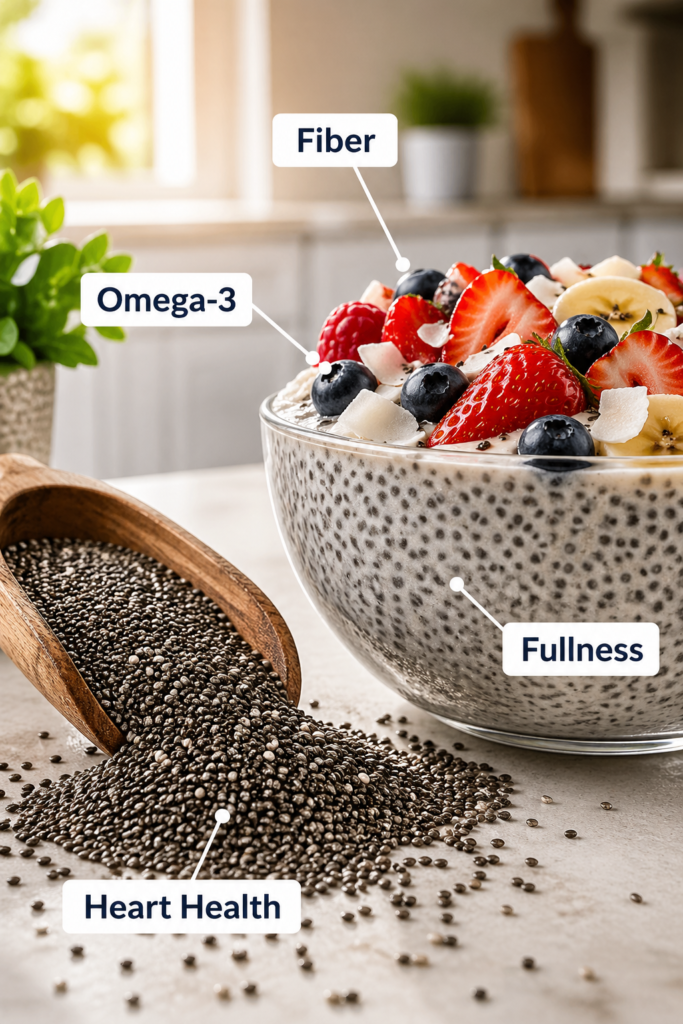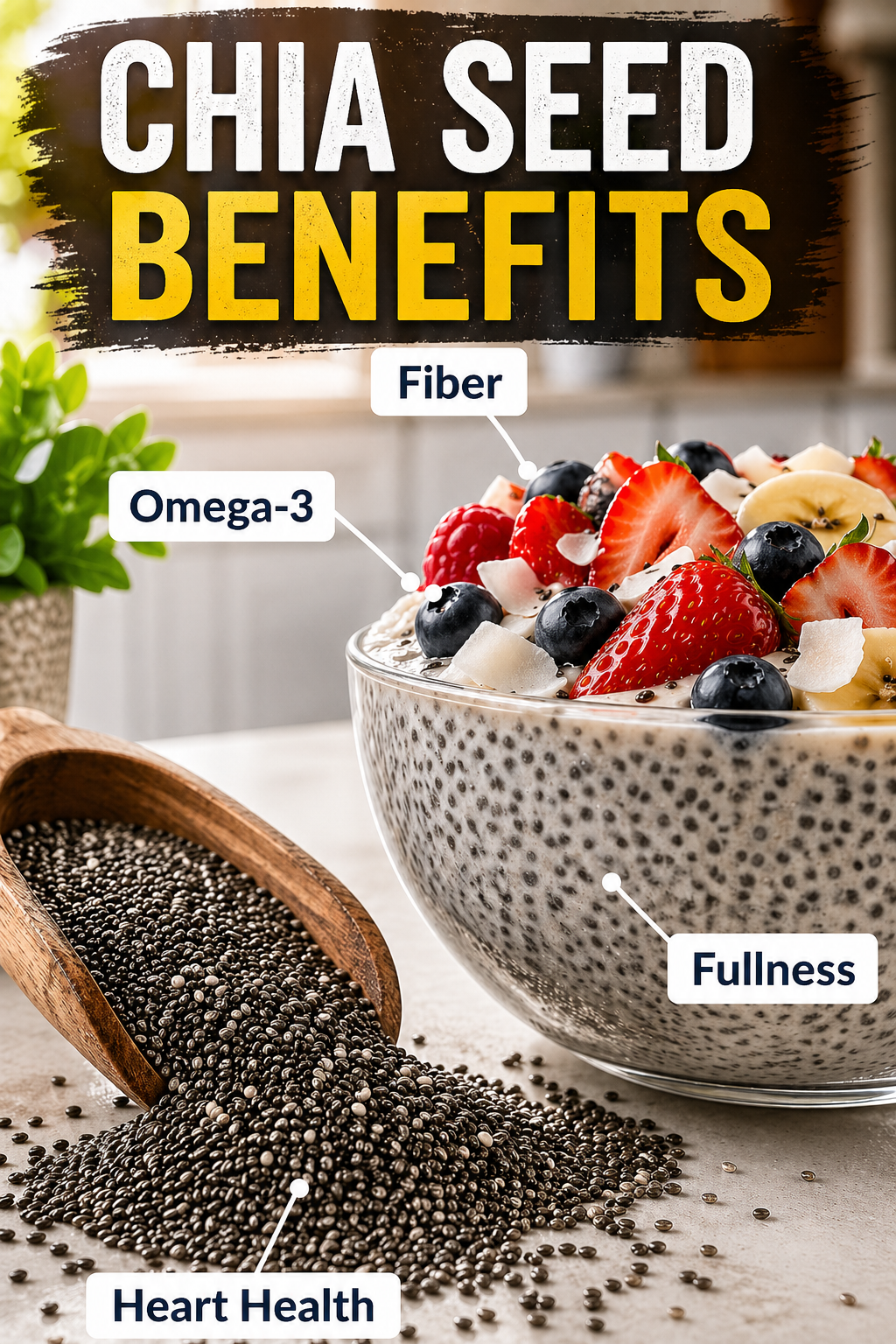
- Chia seeds look tiny, but they work harder than half the foods in my cupboard.
- I started using chia seeds for weight loss, but the health benefits surprised me.
- If your breakfast disappears from your stomach by 10 a.m., chia seeds might help.
- This little seed brings fiber, omega-3s, minerals, and serious meal-prep energy.
- I don’t need another complicated wellness trend. I need food that actually helps.
Here’s the thing: I don’t eat chia seeds because they’re trendy. I eat them because they’re useful. They help make meals thicker, more filling, and easier to prep. And when I’m trying to stay consistent with diet and weight management, useful beats glamorous every single time. Do chia seeds fix everything? No. But can they make breakfast, snacks, digestion-friendly meals, and heart-conscious eating easier? Yes. That’s why I keep coming back to them.
Small seed. Big personality.
- Chia seeds are rich in fiber. Fiber helps meals feel more satisfying and supports digestion.
- They contain plant-based omega-3 fatty acids. These healthy fats are one reason chia seeds are often linked with heart-conscious eating.
- Chia seeds can support weight management. They are not magic, but they can help make meals more filling and easier to prep.
- They are easy to use. Add them to chia pudding, smoothies, overnight oats, yogurt bowls, or healthy snacks.
- The best benefit is consistency. Chia seeds make healthy eating easier to repeat, which is where real progress usually happens.
Why I Care About the Health Benefits of Chia Seeds
I used to see chia seeds as one of those “wellness shelf” ingredients people bought with good intentions and then forgot about behind the oats. You know the type. A tiny bag with big promises, sitting there like it’s waiting to become someone’s new personality. But once I started actually using them, I understood why the health benefits of chia seeds get so much attention.
They’re simple. They’re flexible. They don’t need cooking. And they can turn a very basic breakfast into something that feels more filling and intentional. That matters to me because healthy eating gets much harder when every meal needs effort. I don’t always want to cook. I don’t always want to think. Sometimes I want to open the fridge and find something already made, creamy, spoonable, and not completely useless from a nutrition point of view.
Look, I’m not saying chia seeds are magic. They are seeds, not tiny life coaches. But they do bring a lot to the table. The nutritional benefits of chia seeds include fiber, plant-based omega-3 fatty acids, some protein, antioxidants, and minerals like calcium and magnesium. That mix is why they show up in conversations about chia seeds for weight loss, digestion, healthy breakfasts, and even ways to lower cholesterol naturally through a higher-fiber diet.
And here’s how it affects you: when one ingredient can make breakfast thicker, snacks more satisfying, and meal prep easier, it stops being a random health trend and starts being a practical tool. I like practical. Practical is underrated. Practical is the friend who brings snacks and knows where they parked.
So in this article, I’m breaking down the biggest health benefits of chia seeds, why they work so well in real-life meals, how I use them for diet and weight management, and how you can add them to your routine without making food weird, boring, or wildly overcomplicated.
Because honestly, if a healthy habit tastes bad, takes too long, or makes me feel like I’m being punished, I’m not keeping it. And I doubt you are either.

Chia Seeds Are Rich in Fiber
The first big reason I care about the health benefits of chia seeds is fiber. Fiber is not the glamorous nutrient at the party. It’s not flashy. It’s not usually the thing people brag about. But it quietly does important work, especially if you’re trying to build meals that keep you full and support better digestion.
Here’s why it works. Chia seeds absorb liquid and form a thick gel-like texture. That’s why chia pudding sets in the fridge instead of staying watery. That texture makes meals feel more substantial. And when I’m using chia seeds for weight loss, that matters because fullness is the bridge between “I’m eating healthy” and “I can actually stick with this.”
Have you ever eaten a breakfast that technically looked healthy but left you hungry an hour later? I have. Many times. It feels like being tricked by a salad in a nice bowl. That’s why I like adding chia seeds to meals that need more staying power. A smoothie with fruit and milk is fine. A smoothie with chia seeds and Greek yogurt feels more grounded. Yogurt with berries is nice. Yogurt with berries and chia seeds feels more like a proper snack.
And here’s what life looks like after fiber becomes part of your breakfast routine: you’re not hunting for snacks at 10:17 a.m. like a detective with low blood sugar. You’re calmer. You’re not constantly thinking about food. You have a better chance of making lunch without panic. That alone is worth caring about.
But fiber needs a little respect. If you suddenly go from very little fiber to loads of chia seeds every day, your stomach may not send you a thank-you note. Start small. Add liquid. Let chia seeds soak properly. Drink water. This is not a “more is always better” situation. It’s more like turning up music in the car. A little louder is great. Full blast can ruin the journey.
So if you’re new to chia seeds, I’d start with one tablespoon in yogurt, oats, or a smoothie, then work up from there. If you’re making chia pudding, use a sensible ratio and let the seeds hydrate. Your breakfast should feel creamy, not like you’re chewing tiny pebbles with ambition.
Because fiber is helpful. But only when you use it in a way your body can actually handle.
Simple insight: The fiber in chia seeds is one of the biggest reasons they can make meals feel more filling and useful for weight management.

Nutritional Benefits of Chia Seeds in One Spoonful
The nutritional benefits of chia seeds are one of the reasons this tiny ingredient punches above its weight. I like foods that do more than one job, and chia seeds are very much in that category. They bring fiber, some protein, plant-based omega-3 fats, antioxidants, calcium, magnesium, phosphorus, and a useful little boost of texture.
But here’s the thing: I don’t think most people need a science lecture every time they eat breakfast. I don’t stand over my chia pudding whispering, “Ah yes, magnesium.” I just want to know whether the food helps me feel good, stay full, and keep my routine easier. Chia seeds do that well.
Here’s how it works in normal food terms. Fiber helps with fullness. Protein adds staying power. Healthy fats make a meal feel more satisfying. Minerals like calcium and magnesium help make chia seeds more nutritionally interesting than a basic sweet snack. And because chia seeds are so easy to add to foods, you don’t need to redesign your whole diet to use them.
That’s the part I love.
You can stir chia seeds into yogurt. Add them to overnight oats. Blend them into smoothies. Make chocolate chia pudding. Sprinkle them into a breakfast bowl. Mix them into homemade energy bites. They don’t demand attention. They just quietly upgrade the meal like a good background singer. Actually, let me rephrase that: they’re more like the bassline in a song. You might not notice it first, but everything feels better when it’s there.
And if your goal is diet and weight management, that kind of small upgrade matters. Not because chia seeds cancel calories or do something dramatic, but because they help make healthier meals more filling and easier to repeat. A routine built on repeatable meals is far stronger than a routine built on motivation alone.
So what does this look like on a plate? For breakfast, I might make vanilla chia pudding with berries and Greek yogurt. For a snack, I might make chocolate chia pudding with cocoa and banana. For a smoothie, I might blend chia seeds with protein, berries, and milk. For oats, I might stir in a spoonful to make the whole bowl thicker.
But the big benefit is not that chia seeds are perfect. No food is. The benefit is that they’re easy, nutrient-dense, and flexible. And when a food is easy to use, you’re more likely to keep using it.

Chia Seeds and Heart Health
One reason people talk about the health benefits of chia seeds is heart health. And while I’m careful with health claims, I do think chia seeds fit beautifully into a heart-conscious eating pattern because they’re rich in fiber and contain plant-based omega-3 fatty acids. They also pair well with other heart-friendly foods like oats, berries, nuts, seeds, yogurt, and fruit.
Here’s why this matters. If someone is trying to build a better diet for high cholesterol or wants food ideas to lower cholesterol naturally, the conversation often comes back to fiber-rich foods. Chia seeds can be part of that. They are not a replacement for medical advice or medication if you need it, but they can sit inside a routine that supports better food choices.
And here’s how it affects you in real life. Instead of thinking, “I need to overhaul everything,” you can start with breakfast. Breakfast is a gentle place to begin because it’s repeatable. A bowl of oats with chia seeds and berries. A chia pudding jar with walnuts. A smoothie with chia seeds, Greek yogurt, and fruit. These are not extreme meals. They’re normal. They’re doable. They’re the kind of food changes that don’t require you to become a different person by Monday.
But can chia seeds alone lower cholesterol? I wouldn’t frame it that way. That’s too neat, and bodies are not neat. What I would say is this: chia seeds can contribute to a higher-fiber, nutrient-rich, heart-conscious diet. And that kind of diet pattern may support cholesterol management when combined with other healthy habits.
Look, I know “diet pattern” sounds less exciting than “one secret seed changes everything.” But it’s more honest. And honestly, I’d rather build something that works slowly than chase something that sounds exciting and fizzles out by Thursday.
Here’s how I’d use chia seeds in a heart-friendly breakfast:
- Chia pudding with berries: easy, high-fiber, and naturally sweet.
- Oats with chia seeds: cozy, filling, and simple to batch prep.
- Greek yogurt chia bowl: creamy, higher in protein, and quick.
- Berry chia smoothie: refreshing, easy, and good for busy mornings.
- Chocolate chia pudding: dessert-like, but still built around fiber-rich seeds.
Because sometimes the smartest health change is not dramatic. It’s breakfast. Again and again. Quietly doing its job.

Chia Seeds for Diet and Weight Management
I first came to chia seeds through the topic of chia seeds for weight loss, but I stayed because they make diet and weight management feel less annoying. That’s the honest truth. I don’t need food to be perfect. I need it to help me stay consistent when life gets busy, hungry, stressful, or all three at once.
Here’s the thing about weight management: it’s not just about knowing what to eat. Most people already know that fruit is probably a better snack than a random sleeve of biscuits. The real issue is timing, hunger, prep, cravings, and convenience. If the better option is not available when you need it, it may as well live on the moon.
That’s where chia seeds help. They make it easy to create ready-to-eat meals that feel more filling. Chia pudding can sit in the fridge. Overnight oats can be made ahead. Yogurt bowls take two minutes. Smoothies can be boosted with a spoonful of seeds. And because chia seeds are mild, they work with sweet, creamy, fruity, chocolatey, and nutty flavors.
So here’s why it works: chia seeds support the part of weight management that nobody glamorizes enough — preparation. Preparation is not sexy, but it wins. It’s like putting petrol in the car before a long drive. You don’t clap for yourself at the pump, but you’ll be very glad you did it later.
Do chia seeds make you lose weight automatically? No. But do they help create meals that may reduce random snacking because you’re more satisfied? Yes. And that’s useful. Especially if your usual problem is not eating “bad” food, but getting too hungry and then making fast choices that don’t match what you wanted for yourself.
Here’s what life looks like after chia seeds become part of your routine:
- You have a ready breakfast. That means fewer rushed morning decisions.
- You have a filling snack. That means cravings feel less chaotic.
- You can prep ahead. That means your future self gets a small gift.
- You can make healthy food taste better. That means you’re more likely to repeat it.
But I’ll say it again because it matters: chia seeds are a tool, not the whole toolbox. For diet and weight management, I still care about protein, vegetables, fruit, water, sleep, walking, strength training, and not treating every meal like a moral exam. Chia seeds just make one piece easier.
And easier is powerful.

Easy Ways To Add Chia Seeds to Meals
The easiest way to get the health benefits of chia seeds is to stop making them complicated. You don’t need a full wellness ceremony. You don’t need rare ingredients. You don’t need to soak them under moonlight while journaling about your goals. You just need simple meals you’ll actually eat.
My favorite method is chia pudding because it does the most with the least effort. Mix chia seeds with milk, add flavor, stir, wait, stir again, chill. That’s it. You can make it vanilla, chocolate, berry, banana, peanut butter, coconut, or protein-style with Greek yogurt. It’s easy, it’s prep-friendly, and it gives you that creamy dessert-for-breakfast feeling without making breakfast ridiculous.
But chia pudding is not the only option. If you don’t love the texture, you still have choices. Add chia seeds to smoothies and blend them well. Stir them into overnight oats. Mix them into yogurt with fruit. Sprinkle them over breakfast bowls. Use them in homemade energy bites. Add a small spoonful to pancake batter or muffins. You can even make chia jam with berries if you want something sweet and spreadable.
Here’s how it works in my kitchen:
- Chia pudding: best for meal prep and grab-and-go breakfast.
- Smoothies: best if you want the benefits without noticing the texture.
- Overnight oats: best for a thicker, more filling oat jar.
- Greek yogurt bowls: best for protein, creaminess, and crunch.
- Chocolate chia pudding: best when I want dessert but still want structure.
- Chia jam: best for toast, yogurt, or oatmeal toppings.
But here’s my honest advice: start with one method. Not five. If you try to transform your whole kitchen routine overnight, you’ll make a mess, get annoyed, and decide chia seeds are the problem. They’re not. The problem is trying to become a new person before breakfast.
So pick the easiest method for your current life. If mornings are hectic, make chia pudding. If you already drink smoothies, add chia seeds there. If you eat yogurt, stir them in. If you love oats, add a spoonful before chilling.
Because the best healthy habit is the one that fits into what you already do.

Here’s What Life Looks Like After Health Benefits of Chia Seeds Become Part of Your Routine
Here’s what life looks like after the health benefits of chia seeds become part of your actual routine: you stop treating healthy eating like an all-or-nothing project. You don’t need a dramatic reset. You don’t need to start again every Monday. You just have a few small meals that help you feel fuller, calmer, and more prepared.
For me, that’s the real win. Chia seeds make breakfast easier. They make snacks more intentional. They make dessert-style recipes feel a little more balanced. And they help me add fiber to my day without needing to sit down with a spreadsheet and design a perfect diet.
But here’s the thing I really want to say: healthy eating does not need to feel like a punishment. If your chia pudding tastes bland, fix it. Add cocoa. Add berries. Add vanilla. Add cinnamon. Add Greek yogurt. Blend it if you hate the texture. Use toppings that make you excited to eat it. A habit you enjoy has a much better chance of surviving real life.
Because real life is not a tidy wellness montage. Real life is late mornings, weird cravings, half-empty fridges, busy afternoons, and days when you’re one inconvenience away from ordering something you didn’t plan to eat. That’s why I like small food habits. They don’t solve everything, but they give you something steady to come back to.
And honestly, chia seeds are good at being steady. They sit in the cupboard. They last. They mix into things. They make pudding. They thicken smoothies. They add fiber. They don’t demand much. There’s something deeply useful about that.
So if you’re trying to improve your meals, don’t start with perfection. Start with breakfast. Start with one jar. Start with one spoonful. Let it be simple enough that you can repeat it without needing a motivational speech.
That’s where the benefits become real.

Why Chia Seeds Are Worth Keeping in Your Kitchen
The health benefits of chia seeds are not about hype for me. They’re about usefulness. Chia seeds are rich in fiber, contain plant-based omega-3 fats, bring helpful minerals, and make meals feel more satisfying. That’s enough reason for me to keep them around.
But the bigger reason is how easily they fit into real life. I don’t have to cook them. I don’t have to plan an elaborate meal around them. I can stir them into yogurt, blend them into a smoothie, prep chia pudding before bed, or add them to oats when breakfast needs more staying power. They’re one of those tiny ingredients that can quietly make healthy eating easier.
And that matters because healthy eating gets hard when it asks too much. If every meal requires effort, planning, cooking, cleaning, and perfect motivation, I’m out. But if one ingredient helps me make better breakfasts and snacks with very little effort, I’m listening.
So, are chia seeds worth it? I think yes. Not because they’re a miracle food. Not because they replace balanced meals. Not because they make weight loss effortless. They’re worth it because they help with the practical stuff: fullness, fiber, meal prep, texture, and consistency.
They can support chia seeds for weight loss goals by making meals more filling. They can fit into diet and weight management because they’re easy to portion and prep. They can be part of a heart-conscious eating pattern because they pair well with other fiber-rich foods. And they can make healthy snacks taste better, which is wildly important if you’re planning to keep eating them.
Start simple. Make vanilla chia pudding. Try chocolate chia pudding. Add a spoonful to yogurt. Blend chia seeds into a smoothie. Don’t overthink it. Don’t make it precious. Let it be easy.
Because most of the time, the best healthy habit is not the one that sounds impressive. It’s the one sitting in your fridge tomorrow morning, already made.
Ready to make chia seeds easier to use every week? Grab my favorite chia pudding jars, seeds, toppings, and meal prep tools here: Shop my chia seed meal prep favorites.
Key Takeaways
- Chia seeds are rich in fiber. This helps meals feel more filling and can support a healthier eating routine.
- The nutritional benefits of chia seeds go beyond fiber. They also contain plant-based omega-3 fats, some protein, antioxidants, calcium, magnesium, and phosphorus.
- Chia seeds can support diet and weight management. They work best when added to balanced meals, not treated like a miracle shortcut.
- They can fit into heart-conscious eating. Chia seeds pair well with oats, berries, nuts, yogurt, and other fiber-rich foods.
- Chia pudding is one of the easiest ways to use them. It is simple to prep, easy to flavor, and helpful for busy mornings.
- Consistency matters more than perfection. A small chia habit you repeat is more useful than a complicated plan you quit.
Want to make your chia routine faster and more delicious? Start with my go-to jars, toppings, and easy prep tools here: Click here to build your chia seed starter kit.
Actionable Step-by-Step Checklist
Category 1: Start With One Simple Chia Habit
- Pick one meal.
- Choose breakfast, snack time, or dessert.
- Do not try to change every meal at once.
- Start where chia seeds would help you most.
- Pick one chia method.
- Choose chia pudding if you want meal prep.
- Choose smoothies if you dislike texture.
- Choose yogurt bowls if you want something fast.
Category 2: Make Basic Chia Pudding
- Add chia seeds to a jar.
- Use 2 tablespoons chia seeds.
- Use a jar with a lid.
- Add your liquid.
- Pour in 1/2 cup milk.
- Use almond milk, oat milk, coconut milk, soy milk, or dairy milk.
- Add flavor.
- Add vanilla for a simple taste.
- Add cocoa powder for chocolate pudding.
- Add cinnamon and banana for a cozy flavor.
- Stir twice.
- Stir when you first mix it.
- Wait 5 to 10 minutes.
- Stir again to stop clumps.
- Chill it.
- Put it in the fridge.
- Wait at least 2 hours.
- Leave it overnight if you want breakfast ready.
Category 3: Add Chia Seeds to Other Meals
- Add to yogurt.
- Stir in 1 teaspoon to 1 tablespoon chia seeds.
- Add berries for sweetness.
- Let it sit for a few minutes if you want it thicker.
- Add to smoothies.
- Add 1 tablespoon chia seeds before blending.
- Blend well so the texture is smoother.
- Drink it soon or let it thicken slightly.
- Add to oats.
- Stir chia seeds into overnight oats.
- Add extra liquid because chia seeds absorb moisture.
- Top with fruit before eating.
Category 4: Make It Taste Good
- Use fruit.
- Add strawberries, blueberries, raspberries, banana, mango, or apple.
- Use fruit to add sweetness and color.
- Use flavor boosters.
- Add vanilla, cinnamon, cocoa powder, lemon zest, or orange zest.
- Add a tiny pinch of salt to brighten the taste.
- Use toppings carefully.
- Add nuts, seeds, coconut, granola, or cacao nibs.
- Use small amounts if your goal is weight management.
Category 5: Keep It Easy
- Prep two jars at a time.
- Make one vanilla flavor.
- Make one chocolate flavor.
- See which one you like best.
- Repeat your favorite.
- Do not make it complicated.
- Keep the ingredients nearby.
- Make it again when it works.
So start with one spoonful, one jar, or one smoothie — and make it easy enough to repeat tomorrow.