
If you’ve been staring at a bag of chia seeds and wondering what on earth to do with them, this guide is for you. I’m breaking down the best ways to eat chia seeds, how to eat chia seeds, the easiest way to eat chia seeds, what to mix them with, how to add them to oatmeal, how to use them daily, and how to avoid the mistakes that make people give up too soon.
Spoiler: you do not need to become a smoothie monk or a wellness influencer to make chia seeds work for you.
How to eat chia seeds sounds like one of those questions that should have a simple answer. Toss them on something. Stir them into something. Be healthy. Move on. But that’s not how it goes in real life, is it?
You buy the bag with good intentions. Maybe for weight loss. Maybe for digestion. Maybe because someone online swore chia seed pudding changed their mornings, their jeans size, and possibly their spiritual alignment. Then you get home, open the cupboard, and realize you have no clue what the best way to eat chia seeds actually is.
Do you soak them? Eat them dry? Add them to oatmeal? Put them in water? Can you add chia seeds to anything? And why does every second recipe make them look either delicious or vaguely amphibian?
- I bought chia seeds for health… and then let them sit there.
- The easiest way to eat chia seeds is not what most people think.
- If you hate weird textures, don’t panic. I’ve got you.
- Most people are using chia seeds wrong from day one.
- These 11 ideas make chia seeds feel actually doable.
In this guide, I’ll show you the simplest, tastiest, and most realistic ways to eat chia seeds without turning breakfast into a chore. And honestly? A few of these worked better than I thought.
Introduction
I think a lot of people search how to eat chia seeds because they’re not really asking about chia seeds. They’re asking something bigger. They’re asking: “How do I become the kind of person who actually follows through on healthy habits?” That’s the real question humming underneath all of this. Not just chia seeds eating ways. Not just chia seed eating method. Not just what can you eat chia seeds with. It’s whether this tiny thing can slot into a real life that is already busy, messy, inconsistent, and, some days, held together with coffee and blind hope.
That’s why I like chia seeds so much. Not because they’re trendy. Not because they’re magical. And definitely not because I enjoy pretending every healthy food tastes exciting on its own. Chia seeds work because they’re flexible. They slip into your routine without demanding a full personality transplant. You can stir them into breakfast, mix them into drinks, soak them overnight, spoon them into yogurt, blend them into smoothies, or scatter them over oatmeal and call it a win. There are so many ways to eat chia seeds that the problem usually isn’t a lack of options. The problem is too many options with not enough plain-English help.
And that’s where people get stuck. They hear about the benefits of consuming chia seeds, the fiber, the fullness, the easy breakfast angle, maybe even the digestive support, and then immediately hit a wall. Because once you move past the wellness hype, you still need practical answers. What is the best way to eat chia seeds for maximum benefits? What is the best way to digest chia seeds? Can you use them daily? Can you take chia seeds everyday? Can we use chia seeds daily? Can you add chia seeds to anything? And if you’re someone who hates slippery textures, what then?
In this article, I’m going to walk through all of that in a way that feels human. We’ll cover the best way to eat chia seeds, the easiest way to eat chia seeds, how to eat chia seeds in oatmeal, what to pair them with, how to incorporate chia seeds into diet without overthinking it, and how to avoid the common mistakes that make people swear off them too quickly. I’ll also touch on what happens when you eat chia seeds, why the method matters, and how each option affects you in everyday life.
Because sometimes the difference between “healthy food I bought once” and “healthy habit I actually kept” is not discipline. It’s having a plan that doesn’t annoy you. Tiny difference. Huge result.
Image Prompt
Homemade imperfect Pinterest-style photo of an opened bag of chia seeds on a slightly messy kitchen counter beside a spoon, yogurt bowl, jar of overnight oats, and a glass of water, warm morning window light, natural shadows, realistic crumbs and small spills, casual lived-in feel, 2:3 vertical.
What’s the Best Way to Eat Chia Seeds?
If you want the honest answer, the best way to eat chia seeds is the way you will actually repeat. That may sound annoyingly simple, but it matters. A perfect method you hate is useless. A good-enough method you’ll stick with every day? That’s where the magic starts. Well, not magic. More like consistency. Less sexy, but way more helpful.
For most people, the best way to consume chia seed is either soaked or mixed into another food with enough liquid. Chia seeds absorb water and form a gel-like texture, which is why they show up in puddings, overnight oats, and drinks. That soaking ability is one reason they’re so popular in the first place. Harvard’s Nutrition Source describes chia as a versatile seed used in foods and notes that health claims around chia often focus on appetite, weight, triglycerides, and blood sugar, though the real value is usually in how they fit into an overall healthy eating pattern. :contentReference[oaicite:0]{index=0}
What happened for me was this: once I stopped treating chia like a superfood exam and started treating it like an ingredient, everything got easier. That shift matters. Because the question stops being “What is the one correct chia ritual?” and becomes “Where can I fit this into my normal meals?” That is a much friendlier question.
Why it matters is simple. Chia seeds are rich in fiber, and fiber works best when it becomes part of a routine instead of a random heroic effort. NHS guidance on eating more fibre emphasizes that most adults need more fiber in daily life, not in dramatic one-off bursts. :contentReference[oaicite:1]{index=1} If you go too hard, too fast, you may feel bloated, heavy, or just vaguely betrayed. Not ideal. But if you add chia in small, repeatable ways, it can feel easy.
How it affects you depends on the method. Soaked chia tends to feel gentler, especially if you’re new to fiber-rich foods. Chia in yogurt or oatmeal is convenient and filling. Chia in smoothies is great if texture bothers you. Dry chia sprinkled on top of food can work in small amounts, but it’s usually not the safe way to eat chia seeds in larger quantities without enough fluid. That’s why I keep coming back to this point: the best way to eat chia seeds for nutrition is not the fanciest one. It’s the one that fits your appetite, your texture tolerance, and your real schedule.
And let’s be honest for a second. No one wants to build a morning routine around a food that feels like punishment. So pick the easiest entry point. You can always get fancier later. Or not. Honestly, you dont have to.
Image Prompt
Homemade imperfect close-up of a hand stirring soaked chia seeds into a bowl of yogurt on a scratched wooden table, soft window light, slight mess, casual spoon marks, natural food styling, realistic everyday kitchen mood, 2:3 vertical.
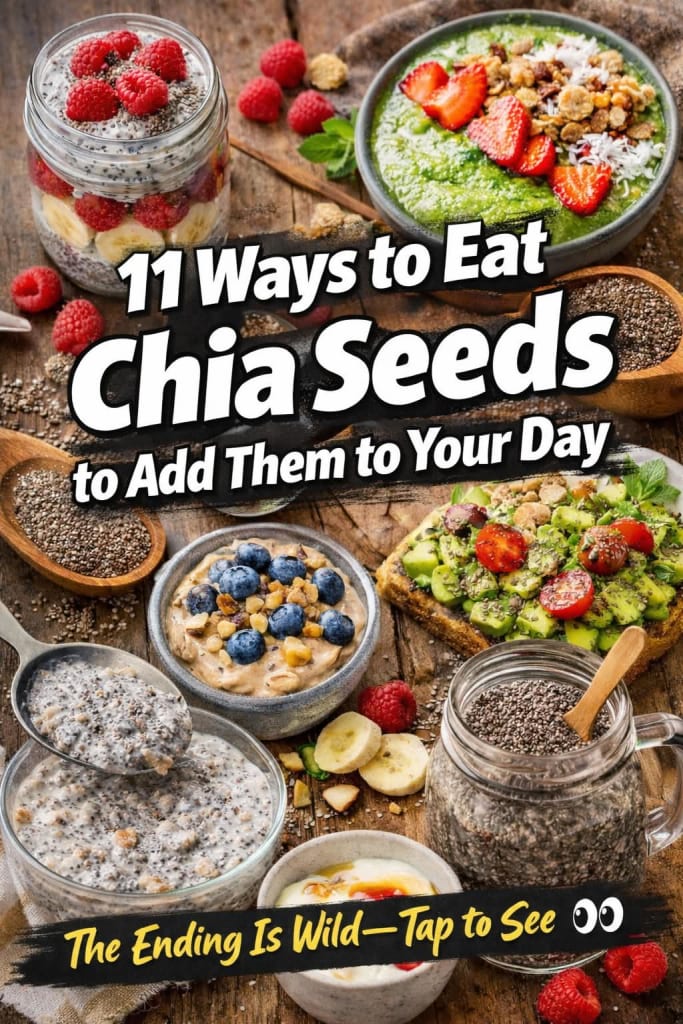
11 Easy Ways to Eat Chia Seeds Without Making Breakfast Complicated
Now for the part most people actually want: real ways to eat chia seeds that feel doable. Not aspirational. Not performative. Doable. This is where how to eat chia seeds becomes less of a theory and more of a routine you can actually see yourself using on a Tuesday morning when you’re half-awake and already late.
1. Stir them into yogurt
This is one of the easiest way to eat chia seeds options because it takes almost no effort. Just stir a teaspoon or tablespoon into Greek yogurt, add fruit, and let it sit for a few minutes if you want a softer texture.
2. Add chia seeds to oatmeal
If you’ve ever wondered how to eat chia seeds in oatmeal, this is ridiculously easy. Add them while cooking or stir them in after. They thicken the oats slightly and make breakfast feel more substantial.
3. Make chia pudding
This is the poster child of chia seed eating ways for a reason. Mix chia seeds with milk or a dairy-free alternative, let them soak, then top with berries or nut butter. It’s easy meal prep and surprisingly satisfying.
4. Blend them into smoothies
If texture is your enemy, smoothies are your friend. This is one of the smartest chia seed eating method choices for people who want the benefits without the gel feel.
5. Make chia water
How to drink chia seeds in water comes up a lot for good reason. A simple mix of water, chia, and lemon can be refreshing, especially if you prefer light breakfasts.
6. Add them to overnight oats
This is one of my personal favorites because it feels efficient. Oats, milk, chia, fruit. Into the fridge. Done. Morning-you will be smug.
7. Sprinkle on fruit bowls
If you’re asking chia seeds what to eat with, fruit is a great answer. Yogurt, banana slices, berries, mango, apple with nut butter. Chia goes with more than people think.
8. Mix with flax seeds
Ways to eat chia and flax seeds work well when added to oatmeal, smoothies, yogurt bowls, or homemade muffins.
9. Stir into salad dressing
This one surprises people. Chia helps thicken homemade dressings a bit and adds texture without much fuss.
10. Add to baking
Muffins, pancakes, breakfast bars, even homemade energy bites. Chia slides into all of those pretty well.
11. Use them in keto-friendly bowls or puddings
For people searching keto chia seed recipes, chia pudding with unsweetened milk and low-sugar toppings is usually the easiest place to start.
What happened when I started rotating between just three of these instead of trying all eleven at once? I stopped forgetting about chia seeds entirely. Why it matters: options are great, but too many options can weirdly become the reason you do nothing. How it affects you: once you find two or three methods that suit your mornings, chia starts feeling automatic instead of aspirational.
Image Prompt
Homemade imperfect 6-panel vertical collage showing chia in yogurt, oatmeal, overnight oats, smoothie, chia pudding, and lemon water, natural lighting, slight kitchen mess, realistic jars and bowls, friendly Pinterest-ready food photography, 2:3 vertical.
What Can You Eat Chia Seeds With?
This is where things get fun, because what can you eat chia seeds with is really just another way of asking how flexible they are. And the answer is: very. Almost suspiciously very. Chia seeds don’t have a strong flavor, which means they tend to borrow the mood of whatever you pair them with. Sweet, creamy, fruity, nutty, refreshing, lightly spiced—they’ll go along with the plan.
If you’re asking chia seeds what to eat with, start with foods that already have moisture or softness. Yogurt is easy. Oatmeal is easy. Overnight oats are easier still because the soaking happens while you sleep. Smoothies are ideal if you want invisible convenience. Chia pudding is the classic for a reason. Even water works, especially if you like a lighter, simpler start to the day.
Then there are the combo foods. Chia and berries. Chia and banana. Chia and nut butter. Chia and cocoa. Chia and flax. Chia and cinnamon. Chia and coconut milk. Chia and apples. Chia and vanilla yogurt. Chia and protein smoothies. Once you realize chia doesn’t need to be the star, just the quietly useful supporting actor, everything loosens up.
What happened for me was that I stopped trying to invent a “chia recipe” and started adding chia to food I already liked. That made the habit stick. Why it matters: when you pair healthy ingredients with familiar foods, you reduce friction. That’s huge. How it affects you: instead of feeling like you’re on some rigid health kick, you just feel like you upgraded breakfast by 10%.
There’s also a practical side here. Mayo Clinic Health System notes that a serving of dried chia seeds offers fiber, protein, carbohydrate, and heart-healthy fats, which helps explain why people like adding them to meals rather than eating them on their own. :contentReference[oaicite:2]{index=2} And because chia pairs well with oats, yogurt, and fruit, it naturally slips into foods people already enjoy. That’s why the question can you add chia seeds to anything is almost yes—but not literally everything. Dry toast? Weird. Clear broth? I’d rather not. Creamy, fruity, spoonable, or drinkable foods? Much better.
If you want the fastest formula, here it is: pick one base, one flavor, one topping. Base: yogurt, oats, milk, smoothie, or fruit bowl. Flavor: vanilla, cocoa, cinnamon, berries, lemon, or nut butter. Topping: fruit, granola, coconut, or more seeds. That’s it. No wellness performance required. Just food that tastes like food.
Image Prompt
Homemade imperfect overhead shot of chia seeds paired with yogurt, berries, oatmeal, banana slices, flax seeds, and a smoothie on a lightly messy breakfast table, soft natural light, realistic lived-in styling, 2:3 vertical.
The Easiest Way to Eat Chia Seeds If You Hate Weird Textures
Let’s talk about the real villain in the chia story: texture. Because for a lot of people, the problem is not nutrition. It’s not routine. It’s not even taste. It’s the fact that soaked chia can feel a little… odd. There, I said it. Tiny gel beads are not universally lovable. If you’ve tried chia once and thought, “Absolutely not,” you are not dramatic. You are having a normal human response.
So if you’re looking for the easiest way to eat chia seeds and texture makes you flinch, the best move is to blend them into smoothies or stir small amounts into foods with stronger structure, like oatmeal or thick yogurt. Smoothies are especially helpful because they solve two problems at once: they mask texture and make it easier to incorporate chia seeds into diet without thinking too hard.
What happened when I stopped forcing myself to like plain chia pudding every time? I actually started eating chia regularly. Funny how that works. Why it matters: the best healthy habit is not the one that looks the prettiest online. It’s the one you can repeat without resentment. How it affects you: instead of abandoning chia because one texture turned you off, you find a form that feels fine, maybe even good.
If digestion is part of your concern too, going slow makes even more sense. NHS and hospital dietary guidance on fiber repeatedly emphasizes increasing fiber gradually and drinking enough fluid, because big jumps can backfire and make you feel worse before you feel better. :contentReference[oaicite:3]{index=3} That’s relevant here because texture-sensitive people often also feel nervous about fullness, bloating, or stomach discomfort. Starting with one teaspoon in a smoothie or yogurt is gentle. It’s calm. It’s realistic.
Other easy options if you hate obvious chia texture:
- Blend into a banana smoothie: creamy, easy, familiar.
- Stir into warm oatmeal: the oats soften the experience.
- Add to overnight oats: more integrated, less slippery.
- Use in baked goods: muffins and breakfast bars barely notice them.
- Mix into thick yogurt with fruit: the texture gets lost in the crowd.
If you’re wondering whether you have to love chia water or pudding to benefit from chia seeds, no. Absolutely not. There isn’t a wellness judge hiding in your kitchen. Pick the format that annoys you least. That’s often the smartest answer. Kind of boring, maybe. Also effective.
Image Prompt
Homemade imperfect photo of a thick berry smoothie being poured into a glass beside a bowl of oatmeal and a yogurt cup with chia mixed in, cozy kitchen setting, soft daylight, realistic splashes and slight imperfections, 2:3 vertical.
Mistakes People Make When Eating Chia Seeds for the First Time
This is the part that quietly decides whether chia becomes a habit or a one-time experiment. Most first-time chia disappointment is not because chia seeds are bad. It’s because the setup was bad. Tiny difference. Big consequences.
The first mistake is doing too much too soon. People hear about the fiber, the benefits of consuming chia seeds, the fullness, the idea that chia might support digestion or make breakfast more satisfying, and they go straight in with a heroic serving. That can be rough. NHS fibre guidance says most adults need more fibre overall, but that increase should be sensible and paired with adequate fluids. :contentReference[oaicite:4]{index=4} So if you’re new to chia, begin small. A teaspoon or tablespoon is fine. You are not failing by easing in.
The second mistake is not adding enough liquid. Chia seeds absorb fluid. That’s part of what makes them useful, but it also means they need hydration to do their thing comfortably. If you’re searching for the safe way to eat chia seeds or the how to prepare chia seeds for consumption side of things, this is where the advice gets very practical: soak them, mix them into wet foods, or make sure you’re drinking enough alongside them.
The third mistake is choosing the wrong method for your personality. Yes, personality. If you hate meal prep, don’t start with elaborate layered pudding jars. If you dislike slippery textures, don’t make plain chia water your first attempt. If mornings are chaotic, pick overnight oats or yogurt. The best way to eat chia seeds for nutrition isn’t the method with the most aesthetic potential. It’s the one your actual life can support.
The fourth mistake is expecting drama. People ask things like what happens when you eat chia seeds as if fireworks are going to go off. Usually what happens is quieter. You may feel fuller. Breakfast may become easier. Your fiber intake may improve. Your routine may feel steadier. That’s not glamorous, but it’s the kind of boring good thing that accumulates.
The fifth mistake is treating chia as a fix-all. Chia can support a balanced routine, but it’s not a replacement for eating enough overall fiber, drinking water, or building meals with protein and produce. As one hospital fibre guide explains, soluble fibre forms a gel-like material that can slow digestion and help with fullness, which is helpful, but only in the wider context of your total diet. :contentReference[oaicite:5]{index=5}
What happened when I stopped making these mistakes? Chia got easier. Why it matters: simplicity keeps habits alive. How it affects you: less bloating, less confusion, less cupboard guilt, more follow-through. And really, that’s what we’re after.
Image Prompt
Homemade imperfect kitchen scene showing a small spoonful of chia seeds beside a large glass of water, yogurt bowl, and simple overnight oats jar, natural soft lighting, slightly messy counter, realistic everyday food prep vibe, 2:3 vertical.
Wrapping Up
If you’ve made it this far, you’ve probably realized that how to eat chia seeds is not actually a complicated mystery. It just gets made to look one by the internet. The real answer is much simpler and much more forgiving. The best way to eat chia seeds is the way that fits into your life without drama. For some people that will be yogurt. For others, oatmeal. For someone else, smoothies, pudding, overnight oats, or a quick lemon chia water. There are plenty of ways to eat chia seeds, and most of them are easier than they first appear.
What happened in my own routine was subtle at first. Breakfast got easier. I felt more prepared. I wasted less mental energy trying to “be healthy” in some grand, cinematic way. Instead, I just had one more ingredient that made normal food feel a little more filling and a little more intentional. That matters more than people think. Because when a habit is easy to repeat, it starts changing your day without asking for much in return.
Why it matters is this: chia seeds are not useful because they’re trendy. They’re useful because they’re flexible. They can slide into foods you already eat. They can support a higher-fiber routine. They can help meals feel a bit more substantial. They can make healthy breakfasts feel less fragile. That doesn’t mean they’re magic. It means they’re practical. And honestly, practical is underrated.
How it affects you comes down to your starting point. If you’ve been confused, you now have options. If you’ve been intimidated by weird textures, you now know smoother methods. If you’ve been wondering what can you eat chia seeds with, how to eat chia seeds in oatmeal, or whether you can use them daily, you now have a clear path. Start small. Pick one method. Repeat it a few times. Then branch out only if you want to.
And if I can leave you with one final thought, it’s this: don’t let a bag of chia seeds become another symbol of “I should be doing better.” Let it be easy. Let it be imperfect. Let it be one spoon in yogurt while your kitchen is a bit messy and your coffee is going cold. That still counts. In fact, that’s probably the version that lasts.
If you want to read more about chia’s nutritional profile from a respected source, check out Harvard’s guide to chia seeds and nutrition. It’s a helpful companion if you want the science without the nonsense.
This Works Better Than I Thought… Shop the simple chia routine I actually recommend here.
Key Takeaways
- The best way to eat chia seeds is the one you’ll repeat. A simple method you enjoy will always beat a perfect method you avoid.
- Yogurt, oatmeal, smoothies, and overnight oats are the easiest starting points. These options make chia feel normal instead of complicated.
- You can add chia seeds to many foods, but moisture matters. Wet foods and drinks usually make them easier and more comfortable to eat.
- If you hate texture, blend chia into smoothies or stir small amounts into oatmeal. You do not have to force yourself to like chia pudding.
- Starting small is smarter than starting big. A gradual approach makes fiber-rich foods easier to tolerate and easier to keep using.
- Chia works best as part of a routine, not as a miracle fix. The benefits show up more reliably when chia supports your normal meals.
- There are many ways to eat chia seeds, so experimentation is part of the process. Finding your version is more important than copying someone else’s.
Actionable Step-by-Step Checklist
Category 1: Pick Your First Chia Method
- Task 1: Choose one easy option.
- Pick yogurt, oatmeal, smoothies, overnight oats, or chia pudding.
- Do not pick five things at once.
- Choose the one that feels easiest today.
- Task 2: Start with a small amount.
- Use 1 teaspoon to 1 tablespoon first.
- You can always add more later.
- Small is smart.
Category 2: Make It Taste Good
- Task 1: Add flavor.
- Use berries, banana, cinnamon, cocoa, vanilla, or nut butter.
- Pick flavors you already like.
- Healthy food should still taste nice. Really.
- Task 2: Match chia with the right food.
- Use wet foods like yogurt, oats, milk, or smoothies.
- If texture bothers you, blend them.
- If you like pudding, soak them overnight.
Category 3: Build the Habit
- Task 1: Repeat the same method 3 times this week.
- Keep it simple.
- Use the same breakfast if that helps.
- Habits stick faster when you stop changing the plan every day.
- Task 2: Drink enough water.
- Chia absorbs liquid, so hydration helps.
- Have a glass of water with your meal.
- This part is boring but important.
Category 4: Try a Second Method Later
- Task 1: Once your first method feels easy, test one more.
- If you started with yogurt, try oatmeal next.
- If you started with smoothies, try overnight oats next.
- Keep expanding only when you feel ready.
- Task 2: Save your favorite combo.
- Write it down or keep it in your notes app.
- That way you don’t have to think so much next time.
- Less thinking = better follow-through.
Sometimes the healthiest habit is not the most impressive one. It’s the one you’ll still be doing next week.